
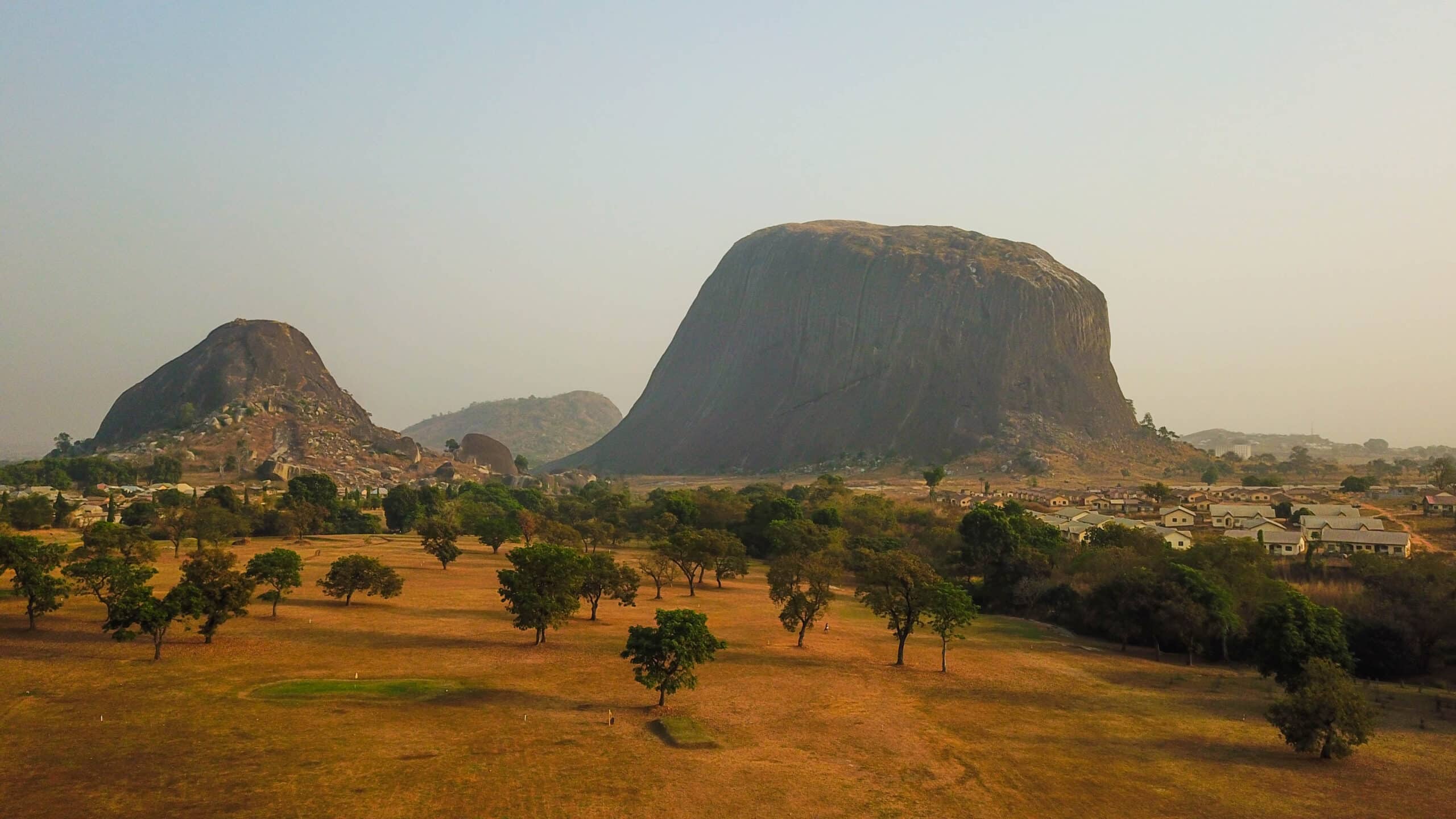
Nigeria is best understood through its places, because geography here is never passive. The land shapes rhythm, belief, and ambition, pressing itself into daily life with clarity and force. Rivers determine trade and memory, forests hold both sustenance and myth, and open plains stretch the imagination toward distance and possibility. To speak of Nigeria without grounding it in terrain is to miss how deeply location informs identity. This is a country where movement—across regions, climates, and histories—has always been central to becoming.
Spanning coastlines along the Atlantic, dense rainforests in the south, rolling savannahs in the middle belt, and arid edges in the far north, Nigeria contains multitudes not only of people, but of atmospheres. Each zone carries its own logic. Weather dictates tempo. Soil influences occupation. Elevation alters mood. These elements quietly shape how communities organize themselves, how they celebrate, how they endure. Geography becomes a shared reference point, even when languages and customs differ.
Nigeria’s destinations are not isolated attractions; they are living systems where history and aspiration overlap. Colonial routes still echo in port cities. Ancient trade paths linger in northern towns. New highways cut through old farmlands, introducing friction and possibility in equal measure. Everywhere, the landscape holds evidence of adaptation—how people have learned to negotiate heat, rain, crowding, and distance with creativity and resolve.
To travel through Nigeria is to feel scale and intimacy at once. Vastness does not erase detail; it sharpens it. These destinations invite attentiveness—to light, sound, terrain, and timing. They ask the reader to slow down just enough to notice how land and life continually shape one another, and how, in Nigeria, becoming is always rooted somewhere real.
18. Kano
Kano rises from the northern plains with a sense of continuity that feels deliberate rather than nostalgic. Situated at the edge of the Sahel, the city has long been shaped by trade winds—economic, cultural, and intellectual. Its geography favors connection: flat land that opens outward, inviting caravans in earlier centuries and commerce in the present day. The heat is assertive here, and daily life responds with early mornings, shaded courtyards, and a respect for rhythm over haste.
The ancient city walls still trace Kano’s historical perimeter, reminding visitors that this was once one of West Africa’s great commercial centers. Within and beyond those boundaries, Kurmi Market continues that legacy, dense with color, fabric, leather, and conversation. Trade here is not transactional alone; it is social, anchored in trust, repetition, and shared time. The city’s architecture—mud walls, mosques, modest compounds—mirrors its values: functional, inward-looking, and resilient.
Kano’s inspiration lies in its steadiness. While modern roads and telecommunications connect it rapidly to the wider world, the city maintains a grounded sense of self. Prayer punctuates the day, and evenings bring a cooling air that slows movement and sharpens reflection. In nearby farmlands, irrigation channels sustain crops against dry conditions, a reminder that survival here has always required planning and cooperation.
To experience Kano is to understand endurance as a form of elegance. The city does not seek reinvention for its own sake. Instead, it adapts carefully, preserving knowledge passed down through generations. Kano teaches that progress can be cumulative rather than disruptive, rooted in land that rewards patience and attention. It is a place where history is not behind you, but beside you, walking at the same measured pace.
17. Jos Plateau
The Jos Plateau rises unexpectedly from Nigeria’s middle belt, lifting the land—and the air—into something cooler, quieter, and contemplative. At over 1,200 meters above sea level, this region feels distinct from the surrounding savannahs, both geographically and emotionally. Mornings arrive crisp, light filters gently through clouds, and the landscape opens into rolling hills punctuated by granite outcrops that appear almost deliberate in their placement.
Jos itself reflects this elevation in temperament. The city moves more slowly, shaped by climate and distance from the coast’s urgency. Markets feel communal rather than compressed, and conversations linger. Once a center of tin mining, the plateau still bears the marks of excavation—water-filled pits now softened by grass and reflection, transformed from industrial scars into quiet lakes.
Beyond the city, villages spread across fertile highlands where farming thrives. Potatoes, vegetables, and grains grow in abundance, supported by cooler temperatures and steady rainfall. These agricultural rhythms ground the region, reinforcing a relationship between land and livelihood that feels direct and transparent. Walking trails wind through hills where cattle graze and children travel long distances on foot, accustomed to scale and openness.
Jos Plateau inspires through contrast. It offers relief—from heat, from congestion, from excess speed—while reminding visitors that difference can exist within unity. The plateau does not isolate; it reframes. From its heights, Nigeria feels broader, its diversity more legible. The land encourages balance, suggesting that perspective often comes from elevation, not escape. Here, geography invites calm consideration, and the quiet strength of the terrain leaves a lasting imprint, long after the air warms again below.
16. The Niger Delta
The Niger Delta is defined by water in motion. Rivers split and rejoin, mangroves grip soft earth, and the boundary between land and sea remains deliberately unclear. Located in southern Nigeria, this vast wetland region resists simplification. Its geography is fluid, demanding constant negotiation from those who live within it. Villages rise on stilts, boats replace roads, and daily life aligns with tides rather than clocks.
Movement here feels different. Canoes glide through narrow creeks, engines echo briefly, then disappear into green corridors. The land absorbs sound, and distance is measured by bends in the river rather than kilometers. Fishing communities rely on intimate knowledge of currents and seasons, understanding that survival depends on reading water as carefully as others read soil.
The Delta’s beauty is layered with complexity. Oil infrastructure cuts through wetlands, introducing tension between global demand and local consequence. Yet resilience persists. Markets thrive on riverbanks, music travels easily across water, and festivals honor both ancestry and environment. The people of the Delta maintain a strong sense of place precisely because the land requires attentiveness and care.
Inspiration here comes from adaptation. The Delta teaches that permanence is not always solid; sometimes it floats, bends, or shifts. Life continues despite erosion and uncertainty, grounded in community and shared responsibility. To experience the Niger Delta is to confront Nigeria’s contradictions directly—abundance and fragility, wealth and vulnerability—held together by geography that refuses to be ignored. It leaves an impression of motion without chaos, a reminder that stability can exist even where the ground itself is never fully still.
15. Ibadan
Ibadan unfolds across hills rather than rising sharply from them. In southwestern Nigeria, the city spreads wide and deliberate, shaped by topography that resists compression. Roads curve with the land, neighborhoods settle into slopes, and vantage points appear unexpectedly, offering long views over rust-colored roofs and distant trees. This geography gives Ibadan a contemplative quality, as though the city is always pausing to look back at itself.
Historically a center of learning and administration, Ibadan’s intellectual legacy feels embedded in its physical form. The University of Ibadan sits on elevated ground, its open campus echoing the city’s broader sense of space and inquiry. Even beyond academic settings, conversation here carries weight. Markets are lively but not frantic, and daily life moves with a confidence shaped by familiarity rather than urgency.
The climate reinforces this steadiness. Rain arrives generously, cooling afternoons and feeding surrounding farmland. Cocoa and other crops once tied the region closely to global trade, and traces of that era remain in old buildings and quiet roads that once carried heavy purpose. Ibadan does not erase its past; it absorbs it, letting time layer rather than replace.
What inspires in Ibadan is its refusal to rush. The city suggests that scale can be expansive without being overwhelming, and that progress does not require constant reinvention. From its hills, the land reminds you that perspective often comes gradually, earned through patience and repetition. Ibadan is not a spectacle; it is a settlement of thought and continuity, offering a grounded reminder that depth can be as compelling as speed, and that cities, like people, reveal themselves most clearly when given time.
14. Ile-Ife
Ile-Ife carries the weight of origin with remarkable quietness. Located in southwestern Nigeria, the town rests within a landscape of gentle hills and fertile soil, its physical calm reflecting its spiritual significance. Regarded as the cradle of Yoruba civilization, Ile-Ife does not announce its importance through grandeur. Instead, it allows history to exist alongside daily life, woven into paths, groves, and routines.
The geography here encourages continuity. Rainfall is steady, supporting farming that has sustained generations, while sacred forests remain protected pockets of stillness within the town. These groves blur the line between nature and belief, grounding mythology in living terrain. Movement through Ile-Ife feels circular rather than linear, as if the land itself resists finality.
Bronze and terracotta heads unearthed here reveal an ancient sophistication that still shapes cultural confidence. Yet the town itself remains modest, centered on community rather than display. Markets gather people not only to trade, but to exchange stories and reaffirm relationships. Even the presence of a modern university feels integrated rather than disruptive, adding layers without displacing foundations.
Ile-Ife inspires through rootedness. It reminds visitors that beginnings do not vanish once something grows larger elsewhere. Instead, origins remain active, shaping identity long after expansion. The land reinforces this lesson, offering stability rather than spectacle. In Ile-Ife, geography teaches reverence—not as nostalgia, but as awareness. It suggests that knowing where you come from can be a daily practice, grounded in soil that continues to give, quietly and consistently, across time.
13. Enugu
Enugu sits at the edge of southeastern Nigeria’s hills, a city shaped by elevation and history in equal measure. Known as the “Coal City,” Enugu grew from mineral discovery, its early development tied closely to the land beneath it. Though mining has faded, the imprint remains—terraced neighborhoods, winding roads, and a sense of layered effort etched into the terrain.
The surrounding hills give Enugu a contained feeling. From higher ground, the city appears folded into itself, with green valleys softening the density of settlement. Rain falls heavily here, washing streets clean and feeding vegetation that quickly reclaims open spaces. The land feels responsive, alive to seasonal change, and the city adapts accordingly.
Enugu’s pace is reflective. Life moves with consideration, shaped by academic institutions, civil service, and long-standing neighborhoods where familiarity guides interaction. Markets are active but measured, and evenings bring a cooling air that invites outdoor gathering. There is pride here, not loud but assured, drawn from a history of self-definition and resilience.
What Enugu offers is balance. It bridges industry and introspection, past labor and present purpose. The geography reinforces this duality, reminding visitors that effort and rest are both necessary. Enugu inspires by showing how cities can evolve without severing their connection to land or memory. It stands as a reminder that even when the ground once yielded its wealth, it can continue to offer something quieter: perspective, continuity, and room to breathe.
12. Yankari
Yankari lies in northeastern Nigeria, where savannah stretches wide and the land opens into long horizons. As a wildlife reserve, it represents a different relationship with geography—one defined not by settlement, but by preservation. The terrain is dry and expansive, dotted with acacia trees and shaped by seasonal rivers that dictate movement for animals and people alike.
The reserve’s most enduring feature is its water. Warm springs emerge unexpectedly from the earth, creating pockets of life in an otherwise demanding environment. These springs draw wildlife and visitors, serving as reminders that sustenance often appears where least expected. The surrounding grasslands support elephants, antelope, and birds, their presence reinforcing the value of space left undisturbed.
Yankari’s inspiration lies in restraint. It demonstrates what is possible when land is allowed to exist on its own terms. Silence becomes part of the experience, broken only by wind or distant movement. Time stretches here, encouraging patience and observation rather than consumption.
In a country defined by human density and energy, Yankari offers contrast. It invites reflection on scale—how small individual urgency becomes against open land and long cycles. Geography here teaches humility, reminding visitors that coexistence requires limits as much as ambition. Yankari is not about conquest or speed; it is about attention. The land holds its ground, quietly asserting that preservation itself can be a powerful, forward-looking act.
11. Sokoto
Sokoto stands in Nigeria’s far northwest, shaped by open plains and a climate that demands intention. The land here is dry and expansive, stretching toward the Sahel with little interruption. This geography has long influenced how people live—favoring planning, cooperation, and an awareness of limits. Sokoto’s identity is inseparable from this environment, grounded in both faith and adaptation.
Historically a center of Islamic scholarship and governance, the city carries authority without excess. Architecture reflects practicality: thick walls, shaded courtyards, and spaces designed to moderate heat rather than impress. Daily life begins early, aligning with cooler hours, and pauses naturally when the sun asserts itself. The rhythm feels ancient, yet entirely functional.
The Sokoto River threads through the region, offering rare softness in an otherwise firm landscape. Its presence supports farming and settlement, reinforcing how even small geographic features can shape continuity. Markets gather goods from across northern Nigeria and beyond, echoing Sokoto’s long role as a connector rather than an endpoint.
Sokoto inspires through discipline. It shows how culture and belief can emerge directly from land, forming systems that endure because they respect environment rather than resist it. There is clarity here, a sense that life does not need embellishment to hold meaning. The openness of the plains encourages introspection, while the city’s traditions offer structure.
In Sokoto, geography teaches resolve. The land asks for care and foresight, and in return, it offers stability. It is a place where simplicity becomes strength, and where rootedness is both physical and spiritual.
10. Benin City
Benin City rests in Nigeria’s southern rainforest belt, where heat, rain, and red earth combine to produce a landscape of depth and continuity. The city’s geography is lush rather than dramatic, shaped by flat terrain and dense vegetation that encourages enclosure. Streets feel shaded and inward-looking, and the environment fosters a sense of rootedness that mirrors Benin City’s long historical memory.
As the heart of the ancient Benin Kingdom, the city’s significance is inseparable from place. The land supported a centralized state centuries before colonial contact, and its forests once protected intricate systems of governance, art, and ritual. Even today, history is not abstract here. It lives in palace grounds, bronze works, and the spatial logic of neighborhoods that grew outward from royal authority.
Rainfall is generous, and the surrounding land remains fertile, sustaining farming and trade that tie the city to nearby communities. Markets pulse with activity, offering palm products, spices, and textiles, all shaped by what the land provides. The pace is steady, purposeful without haste, reflecting an environment that rewards patience and continuity.
Benin City inspires through permanence. It reminds visitors that cultural confidence can grow from long residence rather than constant motion. The geography reinforces this lesson, offering no urgency to move on, only reasons to stay and understand. Here, progress feels layered rather than linear, built upon what came before. Benin City stands as evidence that when land and leadership align over time, identity deepens, and history remains not behind glass, but underfoot.
9. Ilorin
Ilorin occupies a transitional space, both geographically and culturally. Located at the edge of Nigeria’s middle belt, the city sits between forest and savannah, where landscapes shift subtly rather than abruptly. This in-between geography shapes Ilorin’s character, encouraging flexibility, negotiation, and balance.
The city’s terrain is gently undulating, with open land extending outward toward farming communities. Agriculture thrives here, supported by moderate rainfall and soil that invites cultivation. Daily life reflects this connection to land: early mornings, steady routines, and markets filled with produce that traces a short journey from field to stall.
Ilorin’s history as an emirate and center of Islamic learning is evident in its spatial order. Mosques anchor neighborhoods, and compounds are arranged to favor privacy and shade. Yet the city also absorbs influence easily, welcoming multiple languages, customs, and ideas without losing coherence. Roads feel less hurried, conversations unforced.
What inspires in Ilorin is its quiet adaptability. The city does not insist on a single identity; it allows overlap. Geography reinforces this openness, offering neither extremes of climate nor terrain. Instead, it provides a stable middle ground where coexistence becomes ordinary rather than exceptional.
Ilorin teaches that transition can be a destination in itself. It suggests that strength often lies in mediation—between regions, traditions, and ways of living. The land does not dominate attention, but it supports continuity, allowing people to shape lives that feel measured and sustainable. In Ilorin, balance is not an abstract ideal; it is a daily, geographic reality.
8. Badagry
Badagry sits along Nigeria’s southwestern coast, where lagoon meets ocean and history presses close to the shoreline. The geography here is intimate and exposed, shaped by water that once carried people, goods, and irreversible change. Palm-lined streets and low buildings reflect a town long accustomed to watching movement arrive and depart by tide.
The Atlantic defines Badagry’s temperament. Breezes soften the heat, and the sound of water is constant, a reminder that the town’s past is inseparable from maritime routes. This was once a major port in the transatlantic slave trade, and the landscape still carries that weight. Paths, beaches, and buildings hold memory quietly, without spectacle.
Yet Badagry is not frozen in grief. Fishing remains central to daily life, with boats returning at dawn and markets forming quickly along the shore. The lagoon supports transport and trade, sustaining routines that predate and outlast colonial intrusion. The land offers continuity even when history interrupts.
Badagry inspires through honesty. It does not disguise its past, nor does it allow that past to define its entire future. Geography plays a crucial role in this balance. Water both separates and connects, offering space for reflection while enabling livelihood.
To spend time in Badagry is to feel how place can hold memory without collapsing under it. The land teaches that remembrance and resilience can coexist. Here, geography becomes witness rather than monument, allowing visitors to reflect on history while standing firmly in the present, facing a horizon that remains open.
7. Makurdi
Makurdi stretches along the banks of the River Benue, a city shaped by flow rather than elevation. The river is wide and steady, cutting through central Nigeria with quiet authority. It defines movement, economy, and imagination, reminding the city daily that life here follows natural corridors.
The surrounding land is fertile, supporting farming that feeds both local markets and distant cities. Yams, grains, and vegetables move through Makurdi in constant cycles, tying urban life closely to seasonal change. During the rainy season, the river swells, altering routines and reinforcing respect for natural limits.
Makurdi’s layout reflects its agricultural role. Neighborhoods spread outward rather than upward, and the pace remains unhurried. The city feels open, its energy grounded in function rather than display. People gather near the river in the evenings, drawn by cooler air and shared presence.
What inspires in Makurdi is its clarity of purpose. The city does not compete for attention; it sustains. Geography supports this identity, offering consistency rather than drama. The river connects Makurdi to wider systems while anchoring it firmly in place.
Makurdi teaches that importance is not always loud. Sometimes it flows steadily, shaping lives through reliability. The land reinforces a sense of provision and continuity, reminding visitors that nourishment—physical and communal—often comes from proximity to natural systems. In Makurdi, geography offers reassurance: that balance is possible when settlement aligns with the rhythms that sustain it.
6. Zaria
Zaria rises gently from northern Nigeria’s plains, a city defined by scholarship, structure, and land that favors openness. The surrounding savannah stretches wide, encouraging visibility and connection rather than enclosure. This geography has long supported Zaria’s role as a center of learning and exchange.
Home to one of Nigeria’s oldest cities and a major university, Zaria balances tradition and inquiry. Ancient city walls outline early settlement patterns, while modern campuses extend beyond them, reinforcing continuity rather than rupture. The land allows this expansion, offering space without fragmentation.
Climate shapes daily rhythm here. Heat encourages early starts and shaded rest, while evenings bring communal life back into open spaces. The environment teaches efficiency and moderation, values reflected in the city’s social order.
Zaria inspires through intellectual rootedness. Knowledge here feels grounded rather than abstract, tied to land that has hosted scholars for centuries. Geography reinforces this stability, offering no urgency to relocate, only to deepen understanding.
In Zaria, place supports thought. The openness of the plains mirrors openness of inquiry, and the city stands as a reminder that learning flourishes best when anchored. The land does not distract; it steadies.
5. Oshogbo
Oshogbo rests along the Osun River in southwestern Nigeria, a city where geography and spirituality intertwine naturally. The river curves gently through forested land, shaping settlement patterns and belief systems that remain active rather than symbolic. Water here is not merely a resource; it is a presence, guiding ritual, art, and collective memory.
The Osun Sacred Grove, preserved on the city’s edge, embodies this relationship. Tall trees filter light into soft layers, and pathways follow the river’s logic rather than human insistence. The grove’s continued protection reflects an understanding that cultural survival depends on environmental respect. Oshogbo’s climate—humid, generous with rain—supports this lushness, reinforcing the sense of abundance tied to care rather than extraction.
The city itself feels creative and grounded. Known for its artistic legacy, Oshogbo nurtures expression that draws directly from land and tradition. Markets hum with color and movement, but never feel disconnected from the river’s quieter authority nearby. Daily life flows between commerce and contemplation, each reinforcing the other.
Oshogbo inspires through continuity. It shows how belief can be spatial, anchored in geography rather than abstraction. The land teaches that preservation is an active choice, renewed each generation. To visit Oshogbo is to understand how culture can remain alive when it is allowed to grow alongside rivers, forests, and community. The city leaves an impression of balance—between creativity and reverence, movement and stillness—rooted firmly in the terrain that sustains it.
4. Abeokuta
Abeokuta rises around Olumo Rock, a granite formation that defines both the city’s skyline and its historical consciousness. Located in southwestern Nigeria, the city’s geography is assertive rather than expansive. Rock formations interrupt flat land, offering shelter, defense, and perspective. Abeokuta’s very name—“under the rock”—reveals how place shaped identity from the beginning.
The rock once provided refuge during periods of conflict, and its presence still commands respect. From its summit, the city unfolds in layered neighborhoods, roofs clustered tightly, roads threading carefully through uneven ground. The Ogun River runs nearby, reinforcing Abeokuta’s long-standing relationship with natural protection and provision.
Life here feels industrious and grounded. Markets cluster densely, reflecting a culture of trade and craftsmanship. The land supports farming beyond the city’s edges, tying urban routines to rural cycles. Rainfall is steady, and the red earth absorbs it quickly, sustaining growth without spectacle.
Abeokuta inspires through resilience shaped by terrain. The city teaches that geography can be both shield and guide, offering security while demanding adaptation. Olumo Rock remains a constant reference point, reminding residents and visitors alike that survival often begins with understanding where you stand.
In Abeokuta, history is not distant. It is physical, rising from the ground and insisting on memory. The city’s strength lies in this grounded awareness—an understanding that identity, once formed in response to land, continues to draw meaning from it across generations.
3. Ogbomosho
Ogbomosho sits inland in southwestern Nigeria, defined by openness rather than enclosure. The land here is gently rolling, favoring expansion and agriculture. Streets extend outward without urgency, and the city’s layout reflects a long-standing relationship with farming communities that surround it.
Yam cultivation anchors Ogbomosho’s economy and cultural calendar. The soil is well-suited to tubers, and agricultural cycles shape social rhythms, festivals, and market activity. Geography here is practical, offering sustenance and stability rather than dramatic scenery. Life responds accordingly, grounded in predictability and effort.
The city feels purposeful. Educational institutions contribute to its identity, reinforcing a culture of discipline and aspiration. Yet Ogbomosho remains deeply local, its markets serving nearby towns and villages, its pace steady and unforced. Rain arrives seasonally, cooling afternoons and reinforcing the land’s productivity.
Ogbomosho inspires through reliability. It demonstrates how significance can emerge from consistency rather than prominence. The city does not compete for attention; it fulfills a role. Geography supports this humility, offering land that rewards care and continuity.
To visit Ogbomosho is to encounter Nigeria’s quieter strength—the kind built on feeding others, educating steadily, and maintaining rhythm across generations. The land teaches patience, and the city reflects it back. Ogbomosho leaves a sense of reassurance: that places need not be dramatic to be deeply necessary.
2. Lokoja
Lokoja sits at a geographic convergence that feels symbolic as well as physical. Located at the meeting point of the Niger and Benue rivers, the town occupies one of Nigeria’s most significant natural junctions. Water defines everything here—movement, history, and imagination.
The rivers meet without spectacle, flowing side by side before merging fully downstream. This quiet convergence mirrors Lokoja’s character. As Nigeria’s first colonial administrative center, the town holds historical weight, yet remains understated. Hills rise gently behind it, offering viewpoints that reveal the scale and inevitability of the rivers’ paths.
The surrounding land is fertile, shaped by seasonal flooding that replenishes soil and demands respect. Fishing and farming coexist, and daily routines adapt to the rivers’ moods. Boats glide steadily, connecting communities and reinforcing Lokoja’s role as a passage rather than a destination alone.
Lokoja inspires through symbolism grounded in geography. It teaches how meeting points shape identity—not through dominance, but through connection. The town reminds visitors that convergence can be calm, productive, and enduring.
Here, geography is instruction. Rivers do not rush to merge; they align gradually. Lokoja reflects that lesson, offering a sense of patience and inevitability. It is a place where Nigeria’s vast internal movements become visible, grounded in water that has carried stories, goods, and people for centuries.
1. Oyo
Oyo rests on open land in southwestern Nigeria, where savannah edges into forest and history stretches far beyond the present. Once the political heart of the Oyo Empire, the town occupies terrain that favored cavalry, trade, and regional authority. The land is broad and navigable, encouraging outward reach and strategic movement.
Today, Oyo is quieter, but its geography still speaks of scale. Roads run long and straight, fields extend outward, and the sense of space remains intact. Farming continues to shape daily life, grounding the town in cycles that predate empire and outlast it.
Cultural memory here is embedded rather than displayed. Shrines, compounds, and festivals draw directly from land-based traditions. The environment supports this continuity, offering familiarity rather than disruption. Rainfall is moderate, seasons distinct, and life adjusts accordingly.
Oyo inspires through legacy without insistence. It does not demand recognition; it carries it. Geography reinforces this calm authority, reminding visitors that power once grew from understanding terrain as much as commanding people.
To walk Oyo is to feel how land can remember. The openness that once enabled expansion now encourages reflection. Oyo teaches that influence need not remain visible to remain real. The land holds the memory, steady and unassuming, shaping identity long after empires pass.