
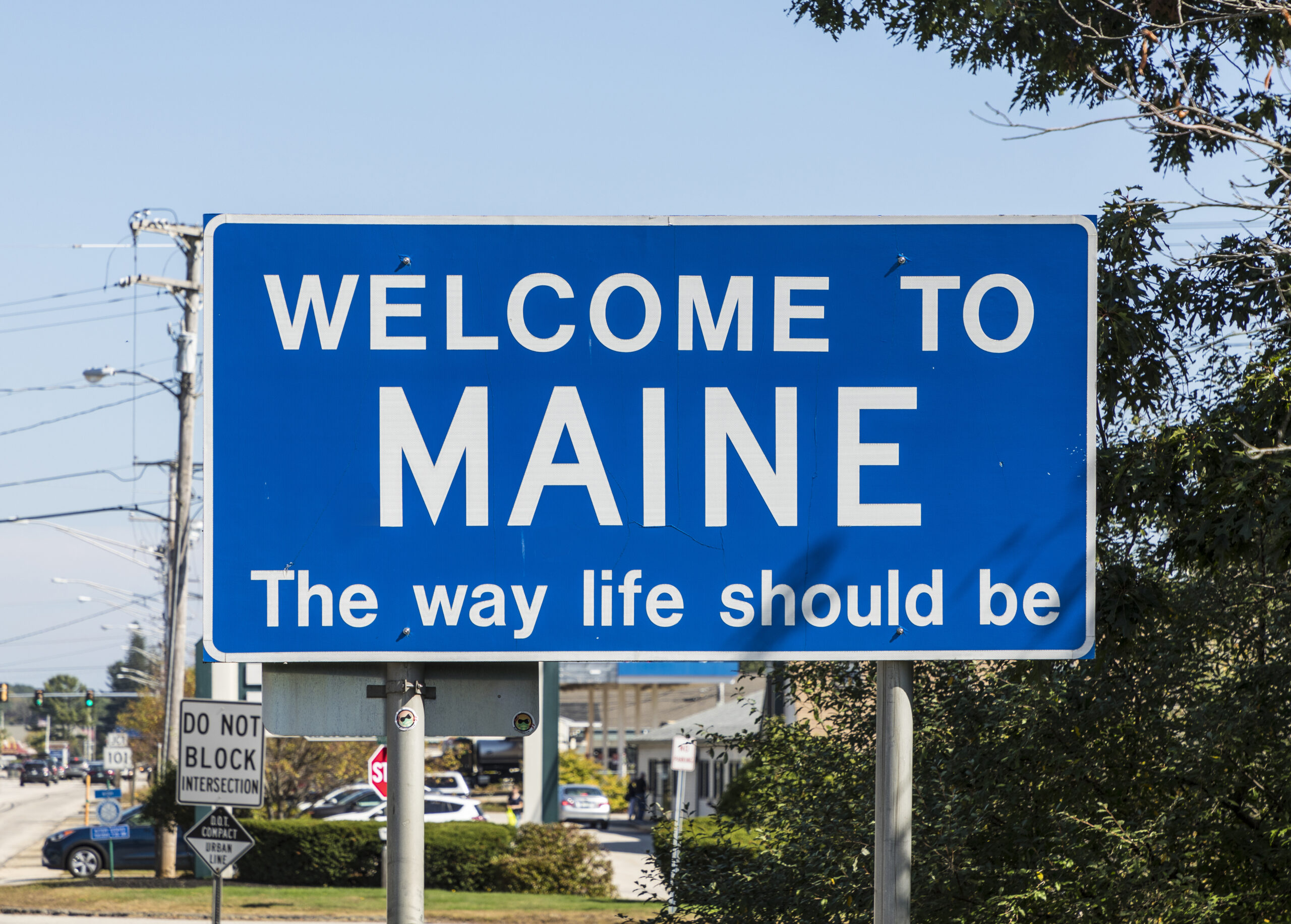
Maine exists at an edge—not only of geography, but of temperament. Here, the North Atlantic presses against granite shores with ancient persistence, and forests stretch inland with a quiet authority that feels older than settlement itself. Maine is not ornamental. It is elemental.
This is a state shaped by weather and work. Fog rolls in without apology, tides dictate rhythm, winters teach restraint. Along the coast, fishing villages cling to rock and harbor, their economies bound to the sea’s generosity and cruelty alike. Inland, vast forests of pine, spruce, and birch absorb sound and distance, offering solitude that feels both protective and profound.
Maine’s beauty is precise rather than exuberant. Light behaves differently here—cooler, sharper—especially at dawn and dusk, when the sky reflects off water and stone in muted blues and silvers. The coastline fractures endlessly into coves, peninsulas, and islands, creating a geography of intimacy rather than sweep. Inland lakes lie still and dark, holding reflections like memory.
Culturally, Maine values self-reliance and understatement. Communities tend to be small, relationships enduring, words chosen carefully. There is a strong sense of continuity—of families tied to place across generations, of labor passed down through hands and habit. At the same time, Maine has long attracted artists, writers, and seekers drawn by its clarity and restraint.
To travel Maine is to slow down. It asks visitors to accept weather as companion, silence as presence, and distance as gift. This is a place where meaning accumulates gradually, like tide lines on rock. Maine does not reveal itself all at once—but those who linger are rewarded with depth, authenticity, and a rare sense of belonging to the edge of something vast.
17. Acadia National Park: Granite, Sea, and Sky
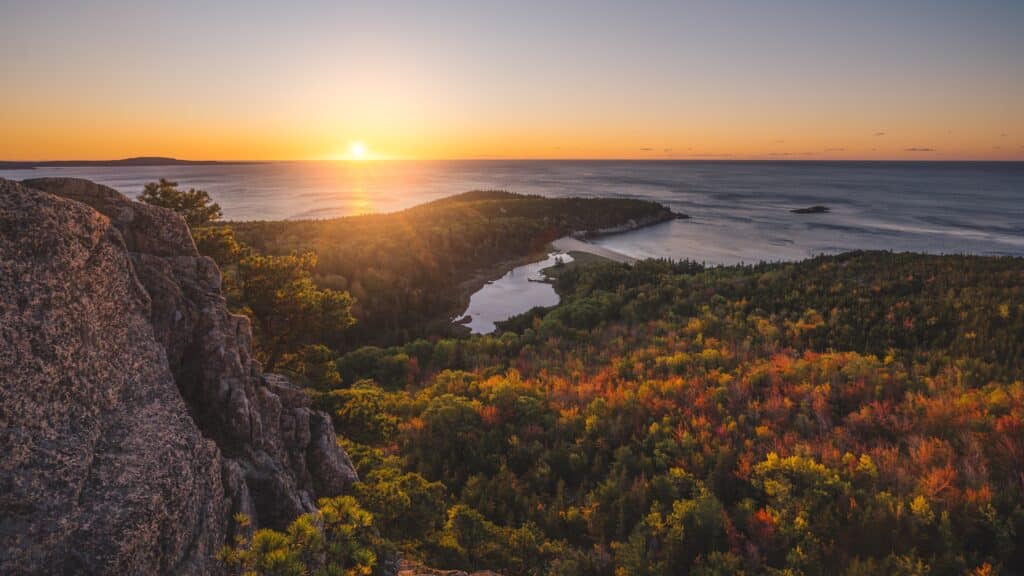
Acadia National Park is Maine distilled. Granite mountains rise directly from the Atlantic, their smooth pink faces shaped by glaciers and surf. Nowhere else in the eastern United States does land meet ocean with such immediacy and drama.
At sunrise, Cadillac Mountain catches first light on the continent, the sky pale and luminous above dark water. Below, carriage roads wind through forests and along lakes, designed to move travelers gently through the landscape rather than dominate it. Everything here feels measured—scale, color, sound.
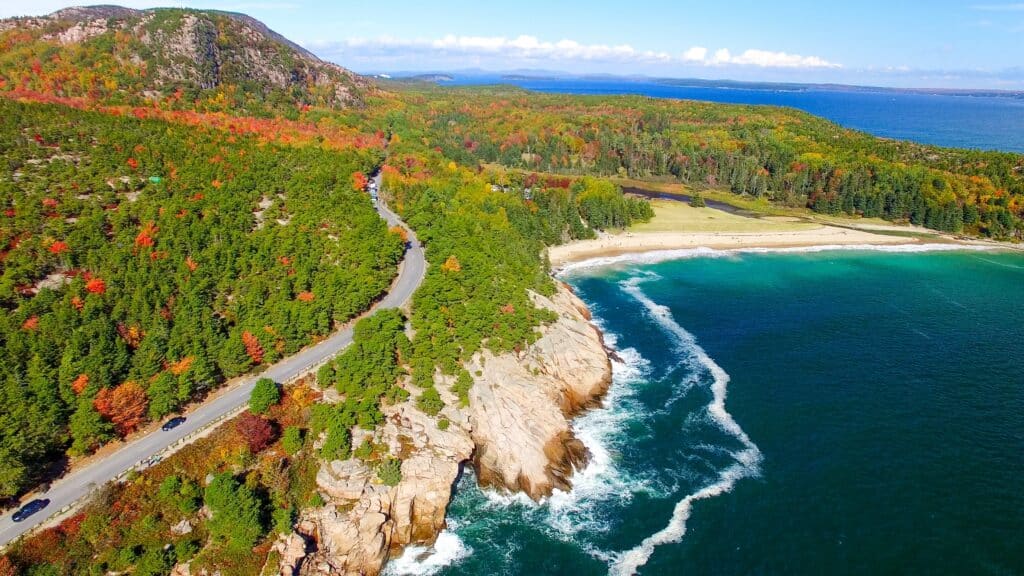
The park’s coastline is restless and musical. Waves strike rock in endless variation, sending spray upward in cold brilliance. Inland, still ponds mirror sky and trees, offering contrast and calm. The rhythm of Acadia lies in this balance between motion and stillness.
Acadia represents Maine’s character in full: resilient, spare, and quietly majestic. It is not a park that overwhelms, but one that invites attention—rewarding those who walk slowly, look closely, and listen.
16. Bar Harbor: Hospitality at the Edge
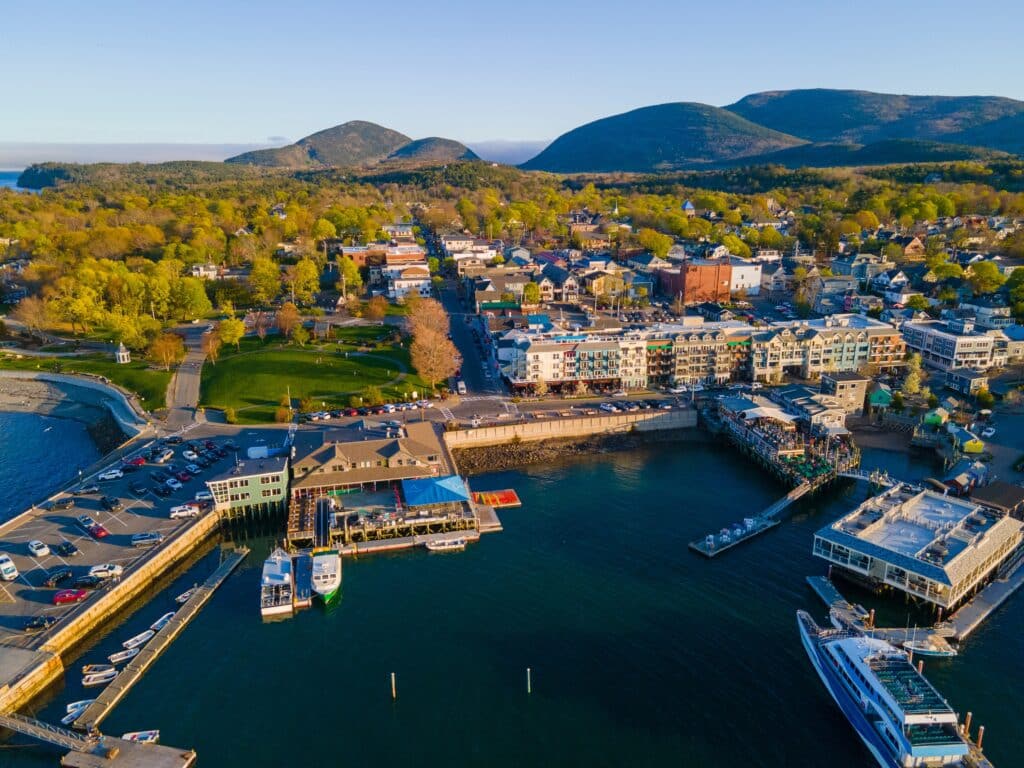
Once a summer refuge for America’s elite, Bar Harbor retains an air of graciousness shaped by sea air and history. Grand homes from the Gilded Age overlook Frenchman Bay, while harbors fill with fishing boats and pleasure craft alike.
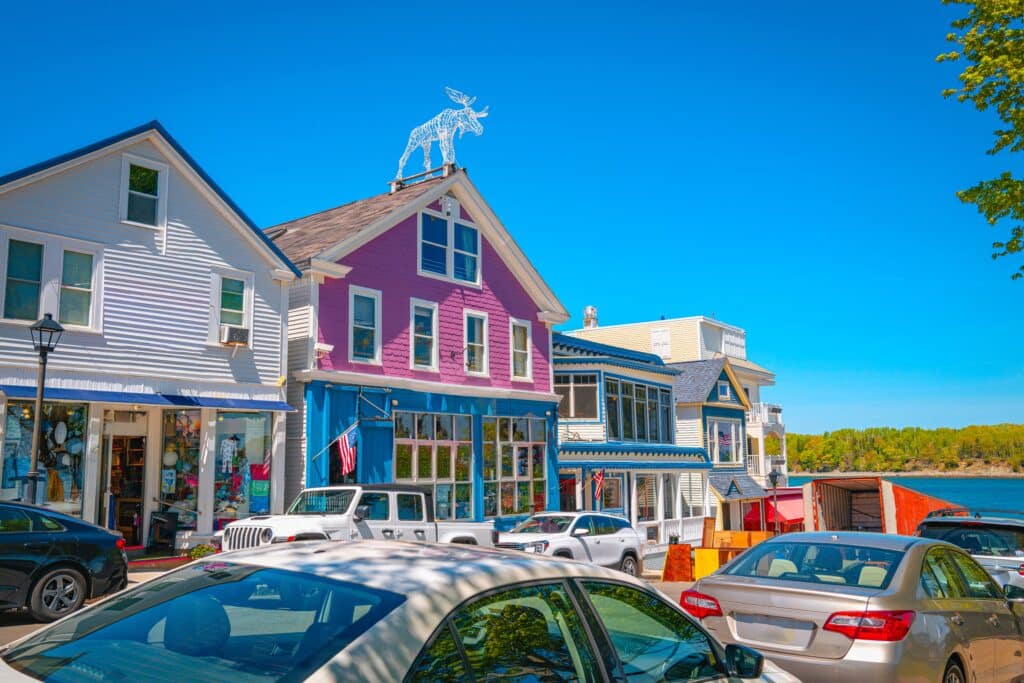
The town balances tourism with authenticity. Side streets reveal working docks, lobster traps stacked in quiet order, and cafés where locals linger year-round. Bar Harbor serves as Acadia’s threshold—a place of comfort before immersion into wilderness.
Fog and weather define the town as much as architecture. Morning mist softens outlines; evenings bring sudden clarity. Bar Harbor teaches visitors that Maine’s charm lies not in perfection, but in atmosphere.
15. The Midcoast: Rockland, Camden, and the Living Shore
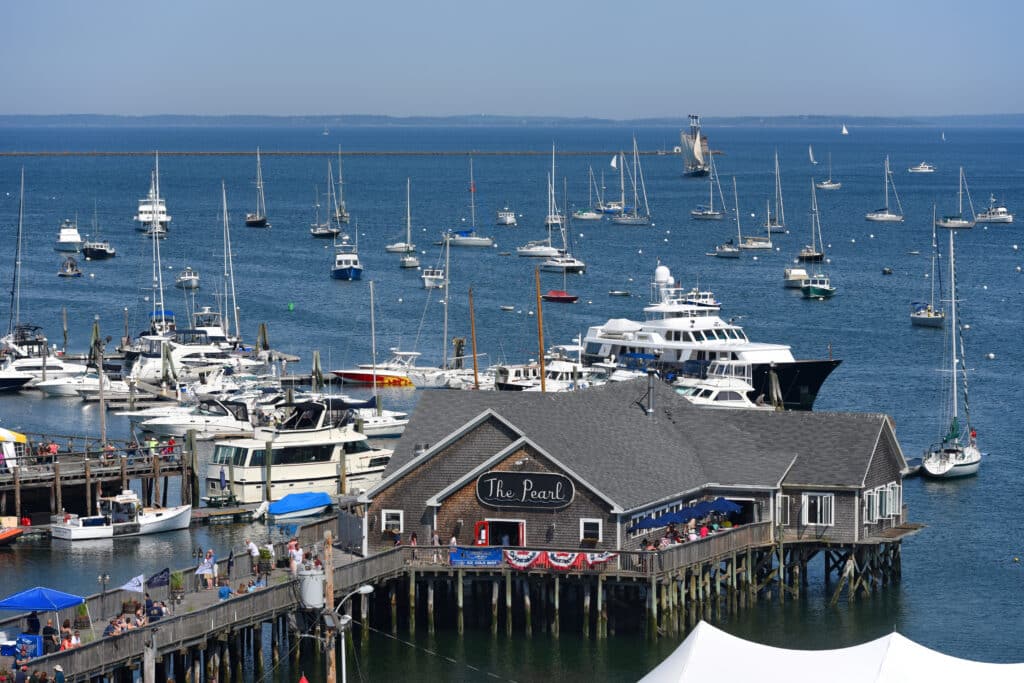
Maine’s Midcoast region captures the state’s maritime soul. Towns like Rockland and Camden combine working harbors with cultural life shaped by art, sailing, and seasonal rhythm.
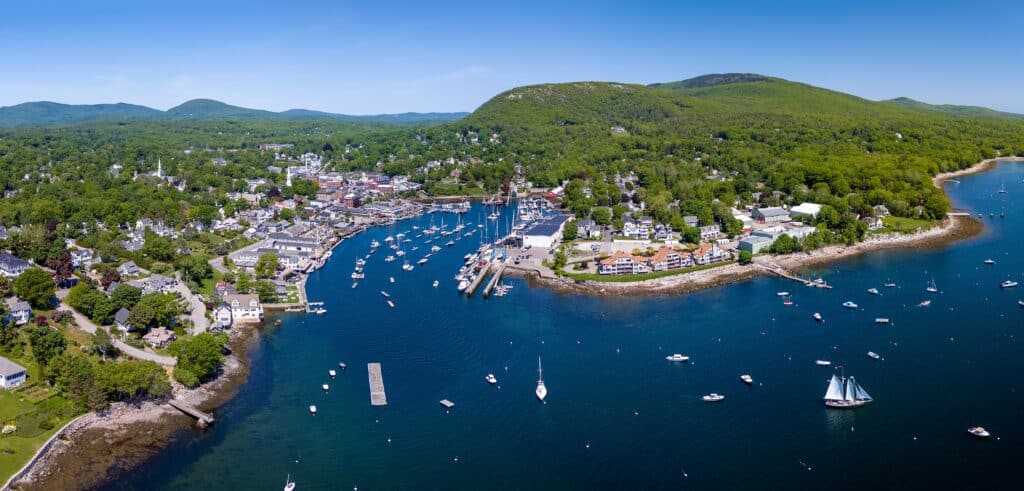
Camden’s harbor curves beneath wooded hills, sailboats rocking gently against docks. Rockland’s museums, galleries, and fishing piers coexist naturally, reinforcing the idea that labor and creativity are not opposites here.
The shoreline is endlessly varied—rocky headlands, quiet beaches, sheltered coves. Each turn reveals a new composition of light, water, and stone. The Midcoast feels lived-in and real, a Maine shaped by continuity rather than reinvention.
14. Portland: Salt, Stone, and Reinvention
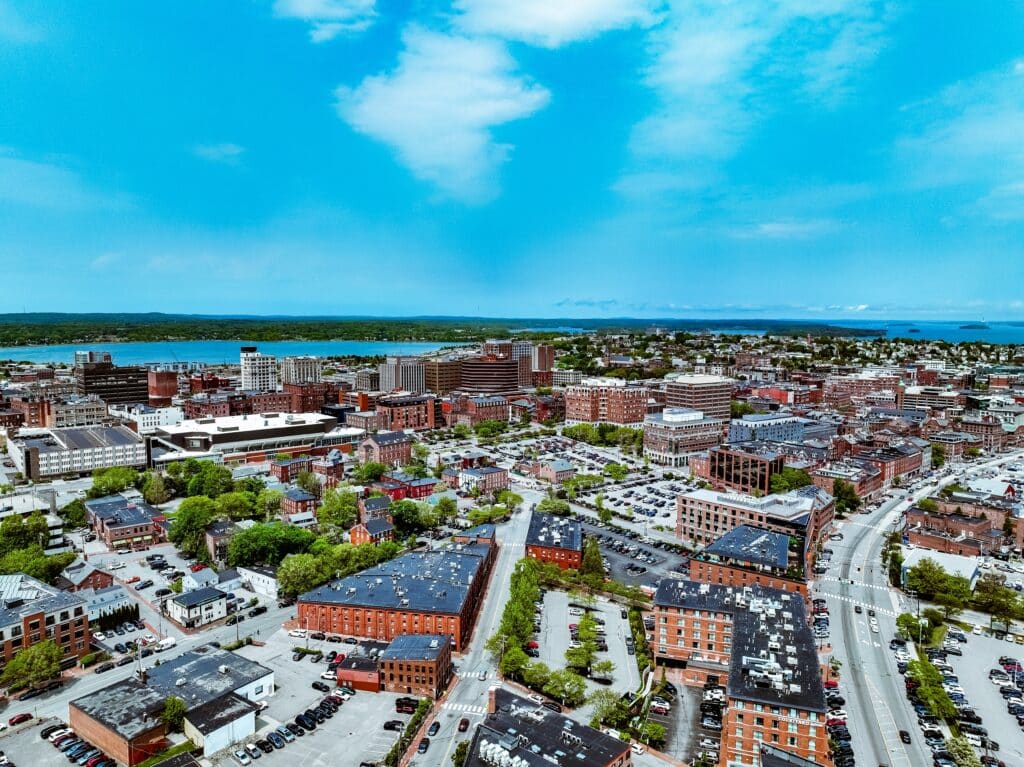
Portland stands at the confluence of tradition and transformation. Built on a rugged peninsula, the city’s brick warehouses and narrow streets speak of maritime trade, while its evolving cultural life reflects a confident modernity.
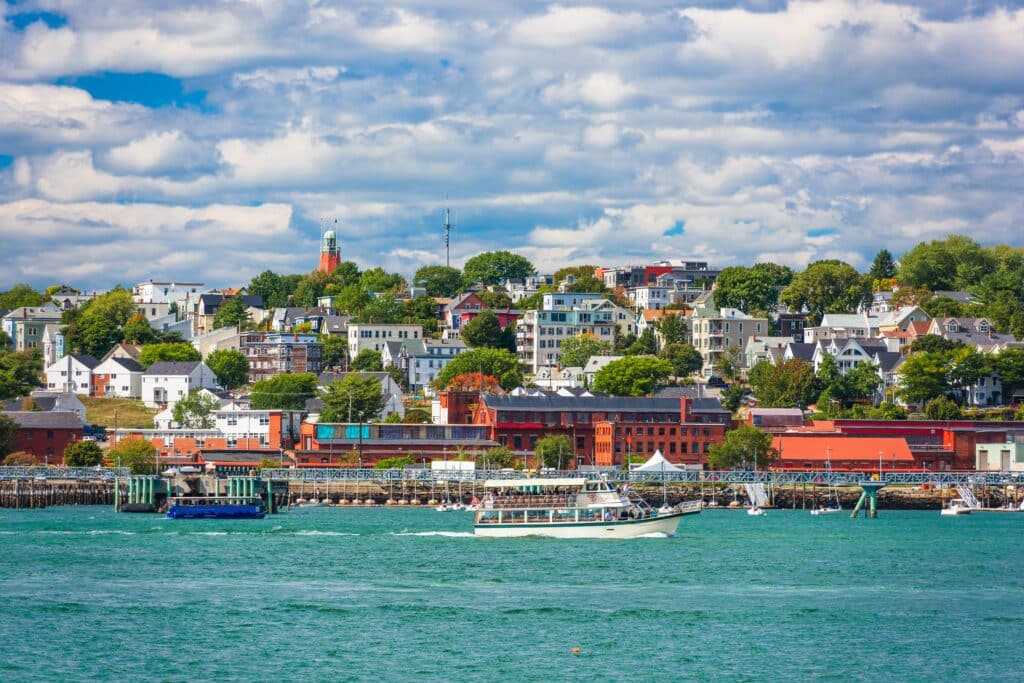
The working waterfront remains active—lobster boats unload daily, ferries depart for island communities, and the scent of salt and diesel mingles with sea air. Nearby, former industrial buildings now house galleries, restaurants, and studios, demonstrating Portland’s ability to adapt without erasing its past.
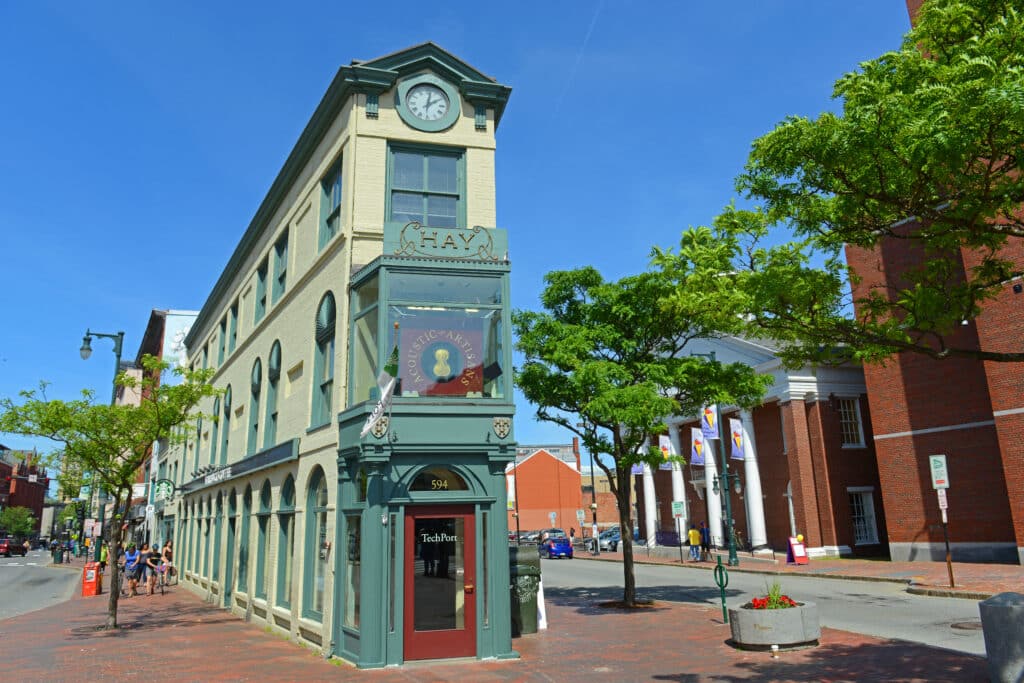
Food has become a defining expression of the city. Chefs draw directly from local waters and farms, translating Maine’s restrained abundance into refined simplicity. Portland’s creative energy feels grounded rather than performative, shaped by season and place.

This is a city that honors labor and imagination equally, embodying Maine’s capacity for renewal without excess.
13. The Maine North Woods: Silence and Scale
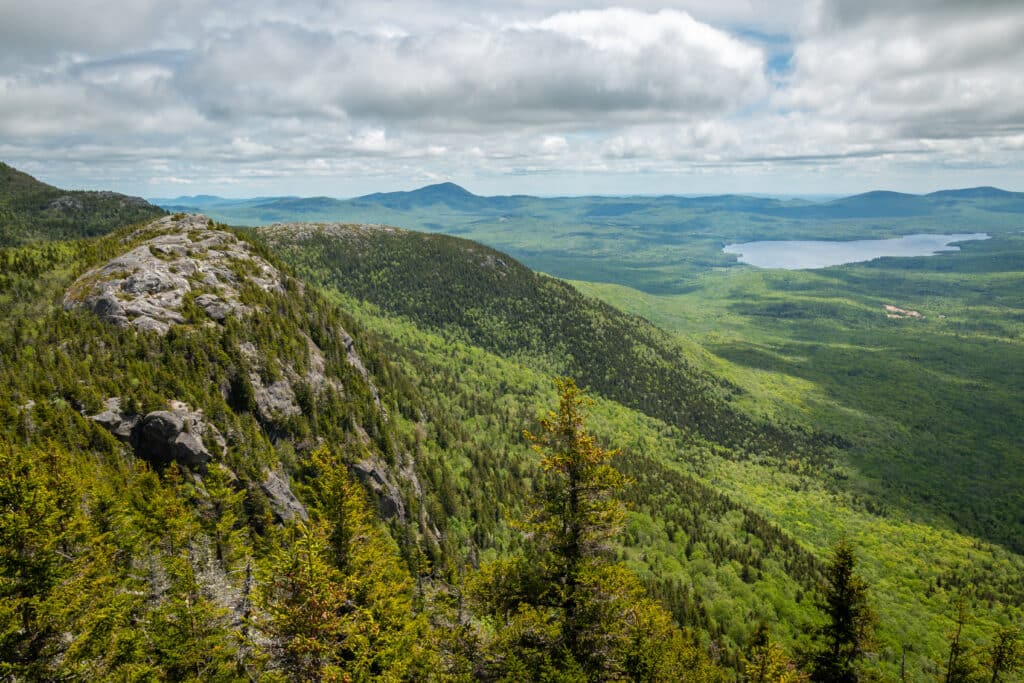
Inland from the coast lies the Maine North Woods, a region so vast and lightly populated that it challenges modern notions of space. Forests stretch uninterrupted for miles, broken only by rivers, lakes, and logging roads that disappear into distance.
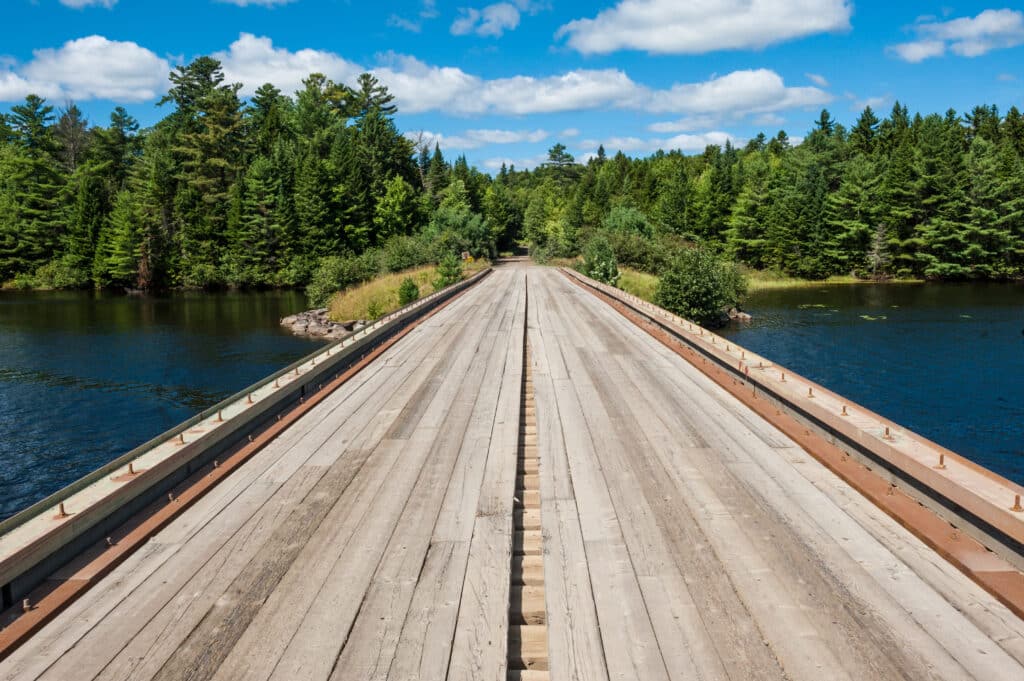
This landscape demands humility. Sound diminishes; movement slows. Wildlife remains abundant—moose, loons, and black bear occupy territory far larger than human settlements. The Allagash Wilderness Waterway offers passage through this solitude, its slow-moving rivers reinforcing the rhythm of patience.
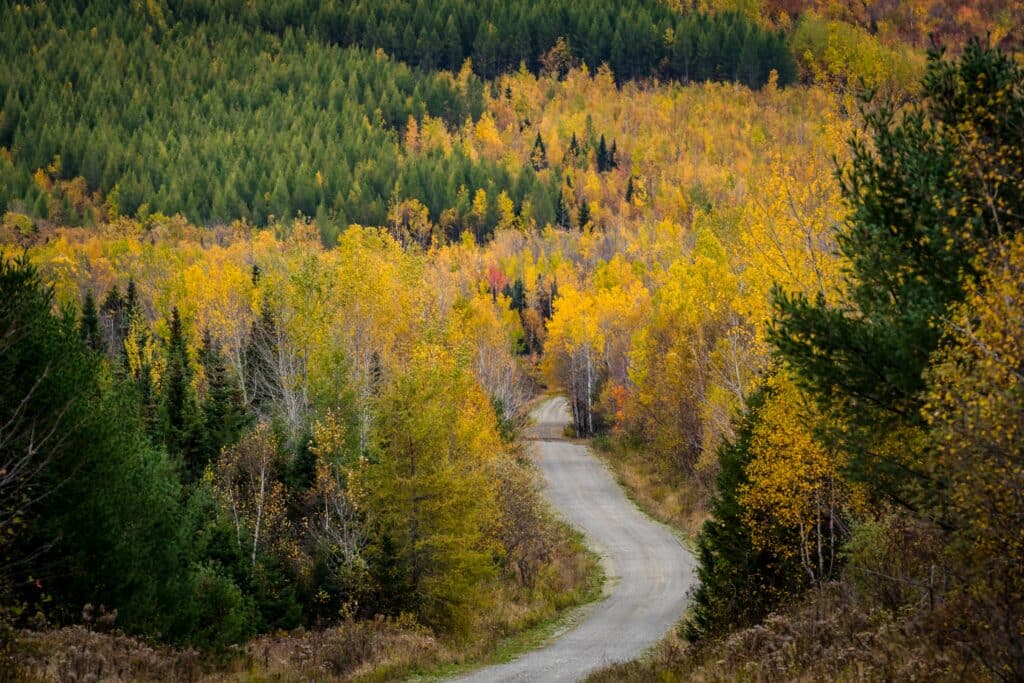
The North Woods represent Maine stripped to essentials: water, tree, sky. It is a place where silence is not absence but presence—a reminder of scale rarely experienced in the eastern United States.
12. Monhegan Island: Art at the Edge of the Atlantic
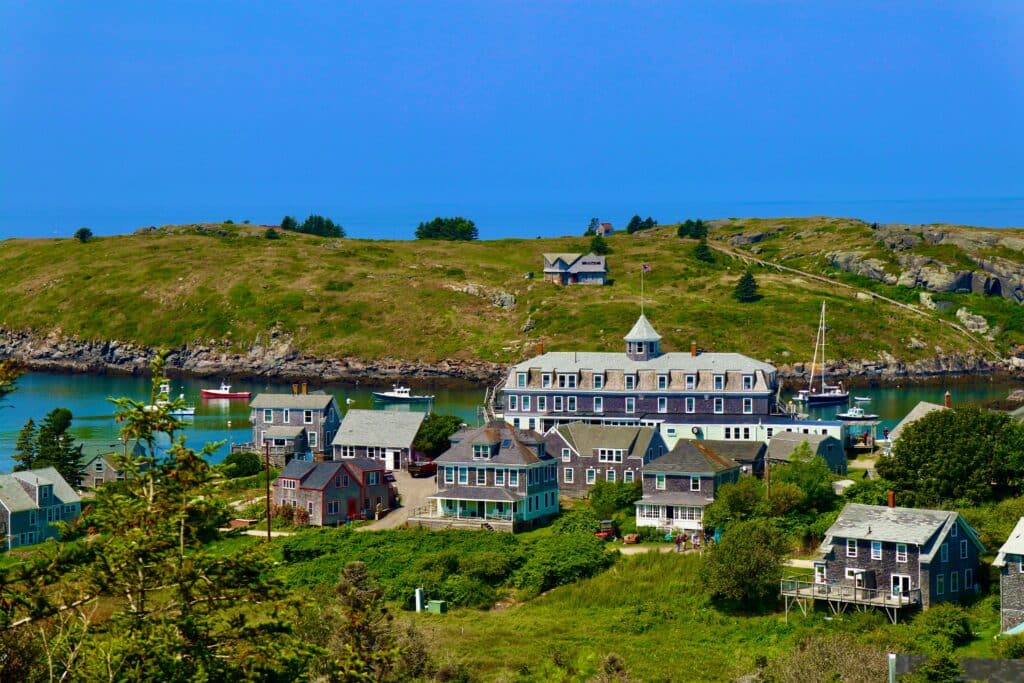
Far offshore, Monhegan Island rises steeply from the sea, its cliffs battered by wind and wave. For generations, artists have been drawn here by light, isolation, and elemental beauty.

There are no cars on Monhegan. Paths wind through forest and across rock, leading to vistas where the Atlantic stretches unbroken to the horizon. Fishing remains central to island life, grounding its artistic reputation in labor and continuity.

The island’s power lies in its exposure. Weather changes quickly; comfort is earned. Yet this very vulnerability has shaped Monhegan’s creative legacy, making it a place where observation becomes necessity.
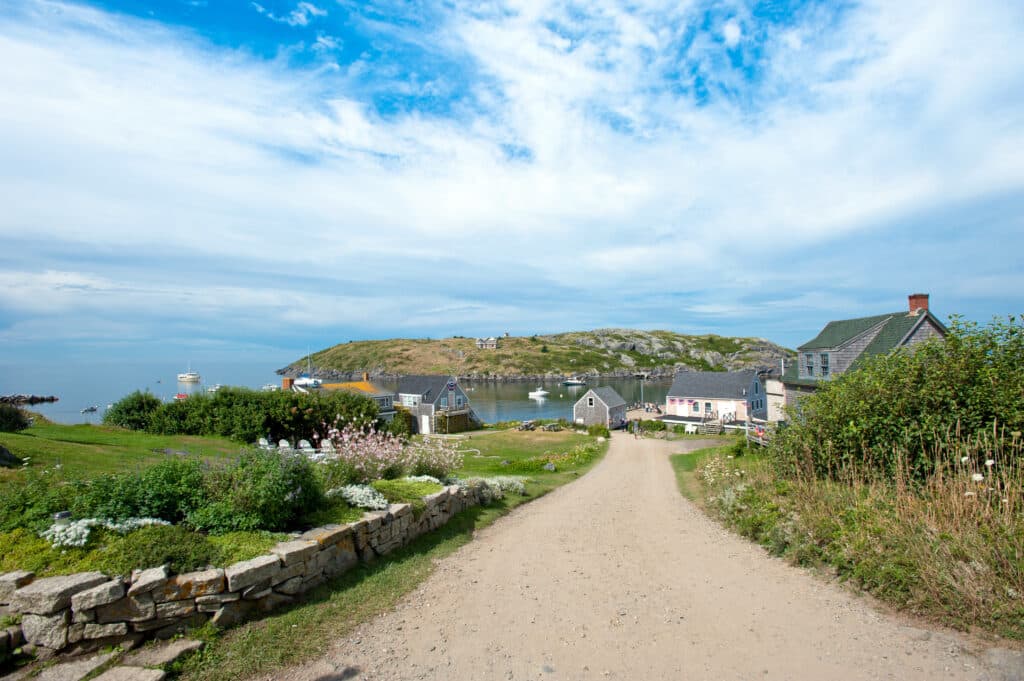
Monhegan distills Maine’s edge—beautiful, demanding, and profoundly honest.
11. Mount Katahdin & Baxter State Park: The Northern Summit
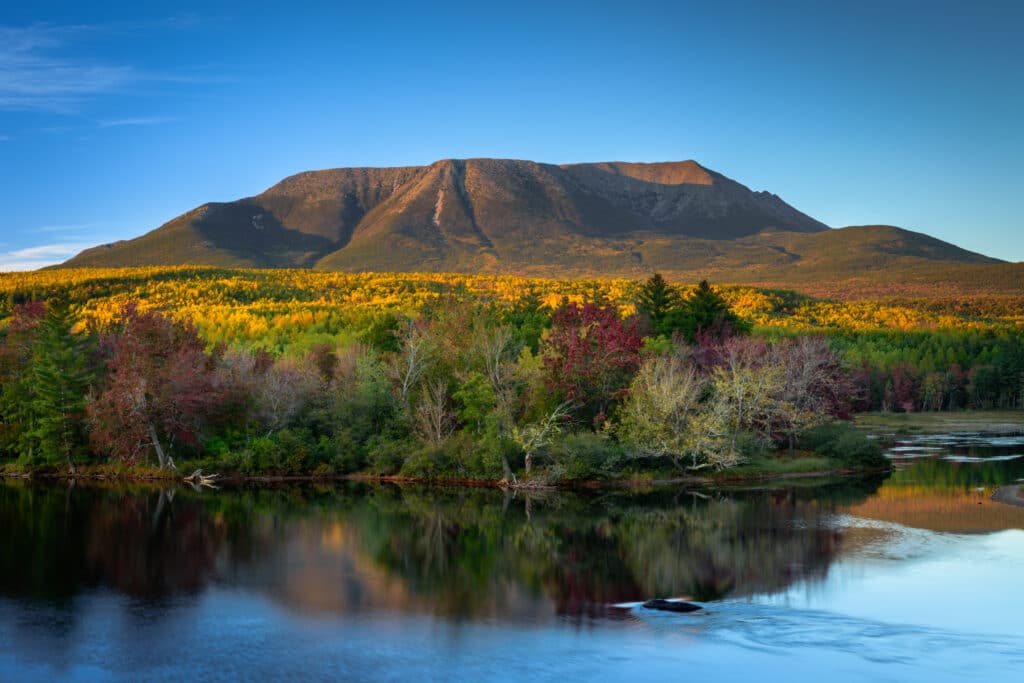
Rising sharply from surrounding forest, Mount Katahdin is Maine’s highest peak and its most formidable presence. Located within Baxter State Park, the mountain stands not as a tourist attraction, but as a challenge—respected rather than softened.
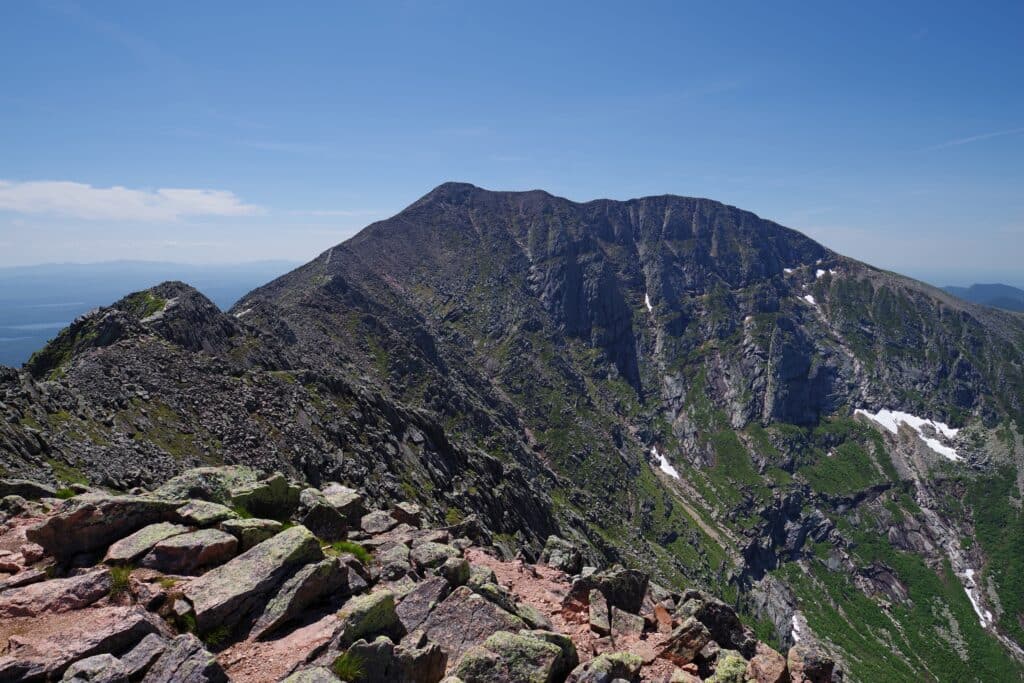
The park’s philosophy of preservation is strict and intentional. Roads are limited, development restrained, and access controlled to protect ecological integrity. Trails climb through forest into exposed alpine terrain where weather changes quickly and effort is rewarded with expansive views.
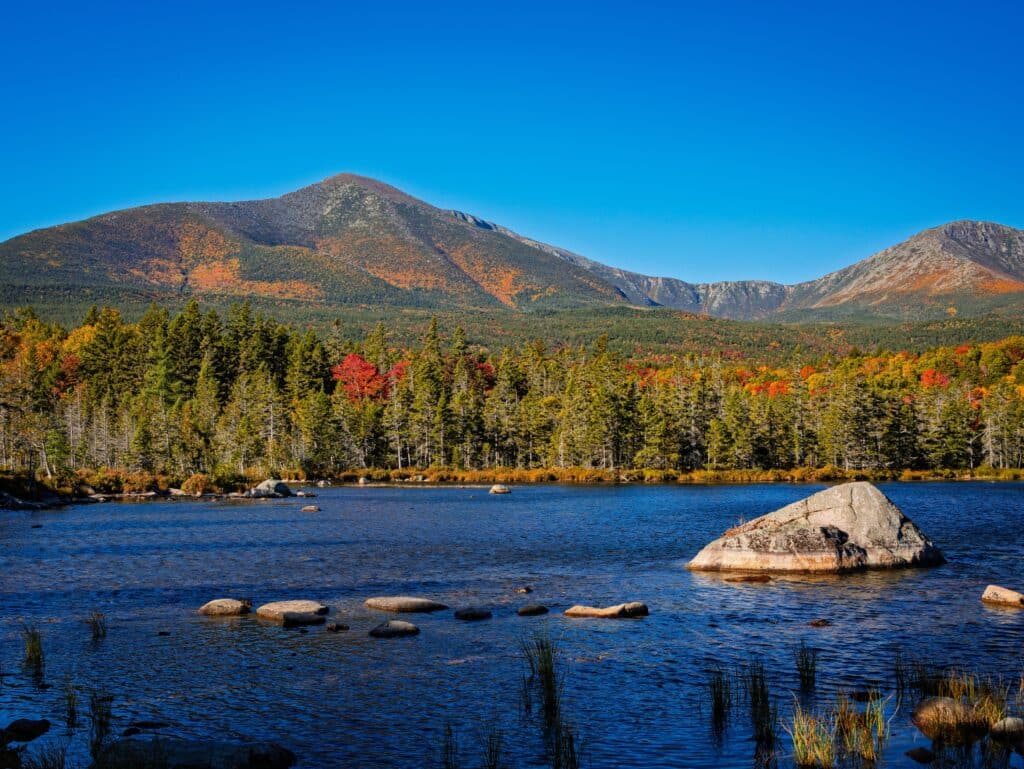
Katahdin marks the northern terminus of the Appalachian Trail, symbolizing both an ending and a beginning. For many, reaching its summit is as much an inward journey as a physical one.
This is Maine in its most uncompromising form—wild, dignified, and indifferent to expectation.
10. The Rangeley Lakes & Western Mountains: Water and Wilderness
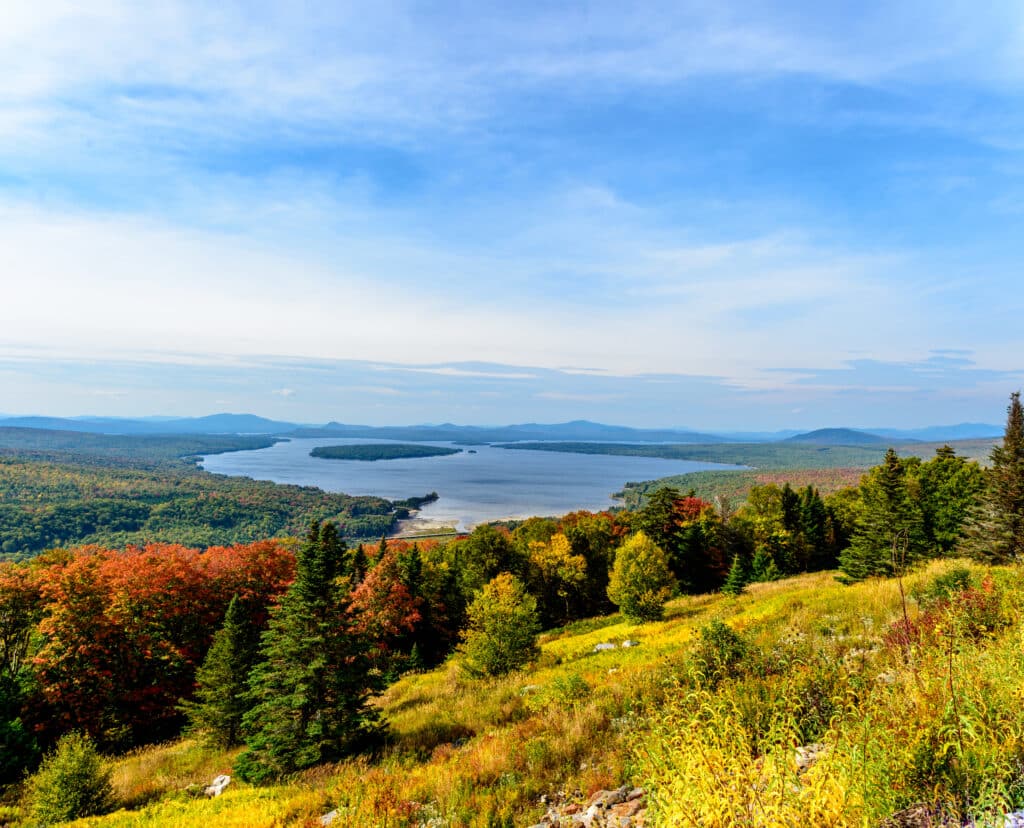
The Rangeley Lakes region offers a quieter grandeur. Lakes spread between low mountains and forested ridges, their surfaces shifting from steel gray to deep blue with changing light.
This region has long drawn anglers, writers, and those seeking measured solitude. Camps and small towns maintain traditions of seasonal living, where time is marked by ice-out, foliage, and snowfall rather than clocks.
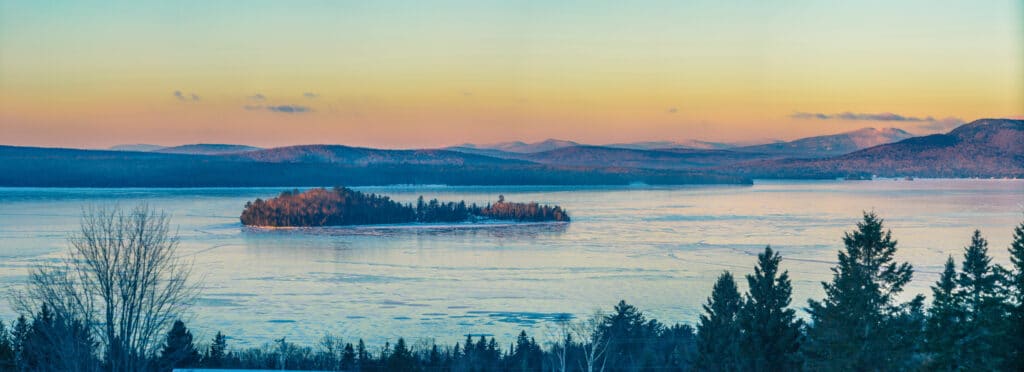
The western mountains provide hiking, skiing, and scenic routes that feel intimate rather than monumental. The landscape encourages reflection, offering beauty that unfolds gradually.
Rangeley reveals Maine’s gentler wilderness—a place of immersion rather than conquest.
9. Down East: Machias to Lubec

The Down East coast marks Maine’s easternmost reach, where towns like Machias and Lubec face the open Atlantic with stoic resolve. Here, the coastline feels raw and less mediated, shaped by tide and isolation.
Fishing remains central to daily life. Harbors are working spaces, not aesthetic backdrops. Weather dictates rhythm, and self-reliance is a cultural value rather than a slogan.
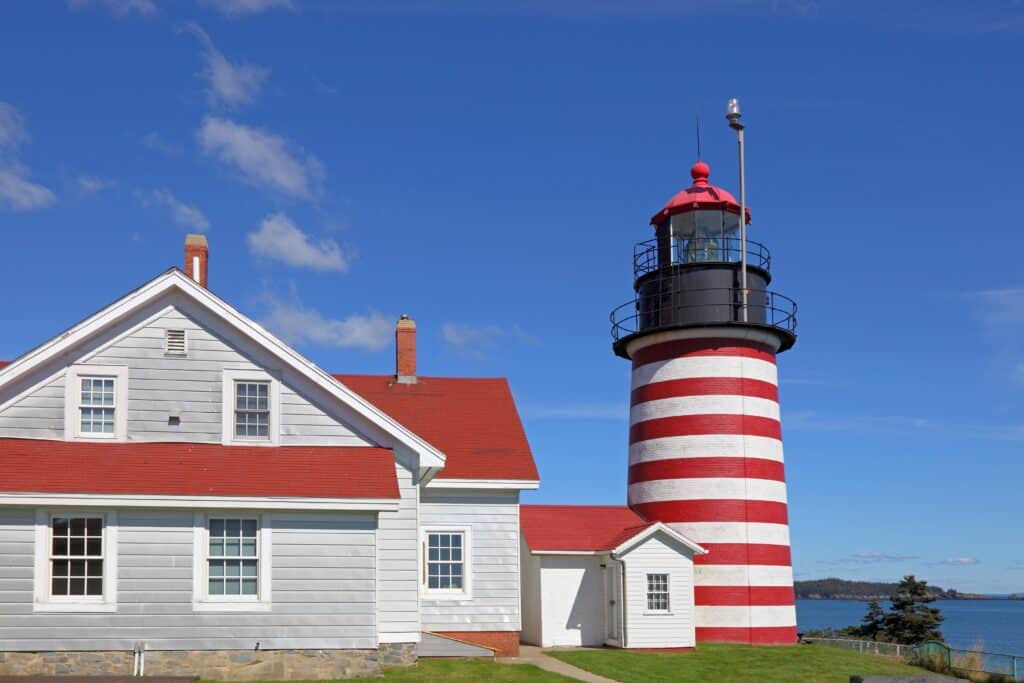
At West Quoddy Head, the sun rises first over the United States, illuminating red-and-white striped lighthouse and cold, restless sea. The moment feels earned—quiet, fleeting, and profound.
Down East Maine embodies endurance. It is not a place that courts visitors, but one that accepts them cautiously, offering authenticity in return for respect.
8. The Maine Islands: Life Offshore
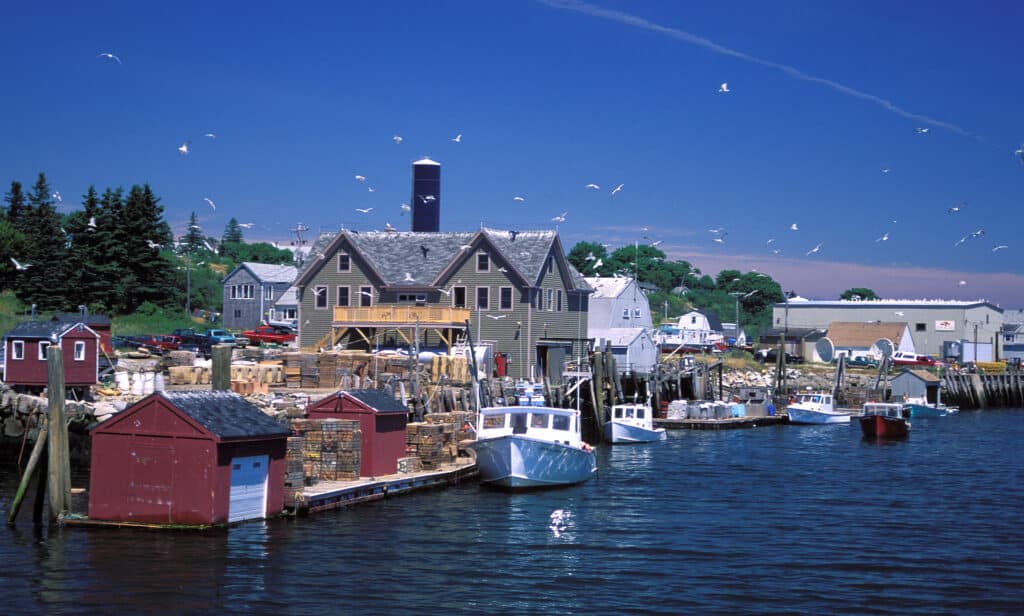
Scattered along Maine’s fractured coastline, the Maine islands form a parallel world—defined by tide schedules, weather windows, and enduring independence. From year-round communities like Vinalhaven and North Haven to seasonal outposts farther offshore, island life here remains deeply shaped by necessity.
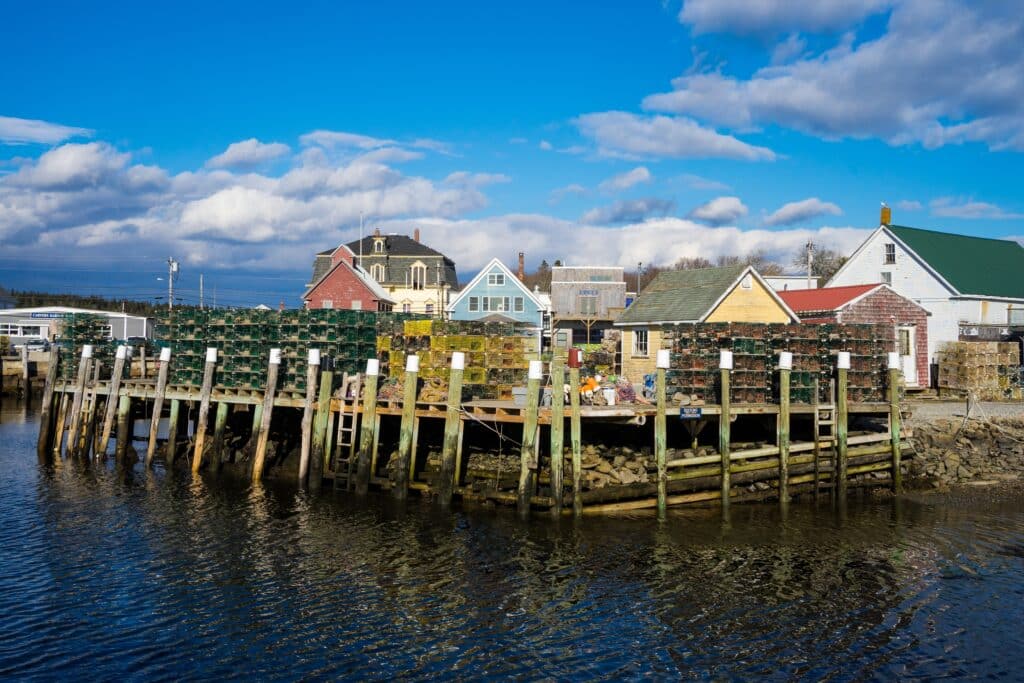
Boats are lifelines rather than leisure. Supplies arrive with deliberation; departures are planned with care. Fishing, boatbuilding, and maintenance structure daily rhythms, reinforcing a culture where self-reliance is not ideological but practical. Winters are long and quiet, binding residents closely to one another and to the sea.
Yet these islands are not austere. Light behaves with rare clarity offshore, and the intimacy of scale sharpens perception. Small harbors become social centers; traditions persist because they must. Visitors are welcomed politely but not indulgently—participation requires adjustment.
The Maine islands preserve a version of coastal life increasingly rare: functional, weather-literate, and resilient. They represent Maine at its most distilled, where survival and belonging are inseparable.
7. Bangor: River City and the Written Word

Set along the Penobscot River, Bangor has long served as a gateway between Maine’s interior forests and its coast. Once a booming lumber capital, the city’s fortunes rose and fell with the timber trade, leaving behind broad streets and solid architecture reflective of former prosperity.
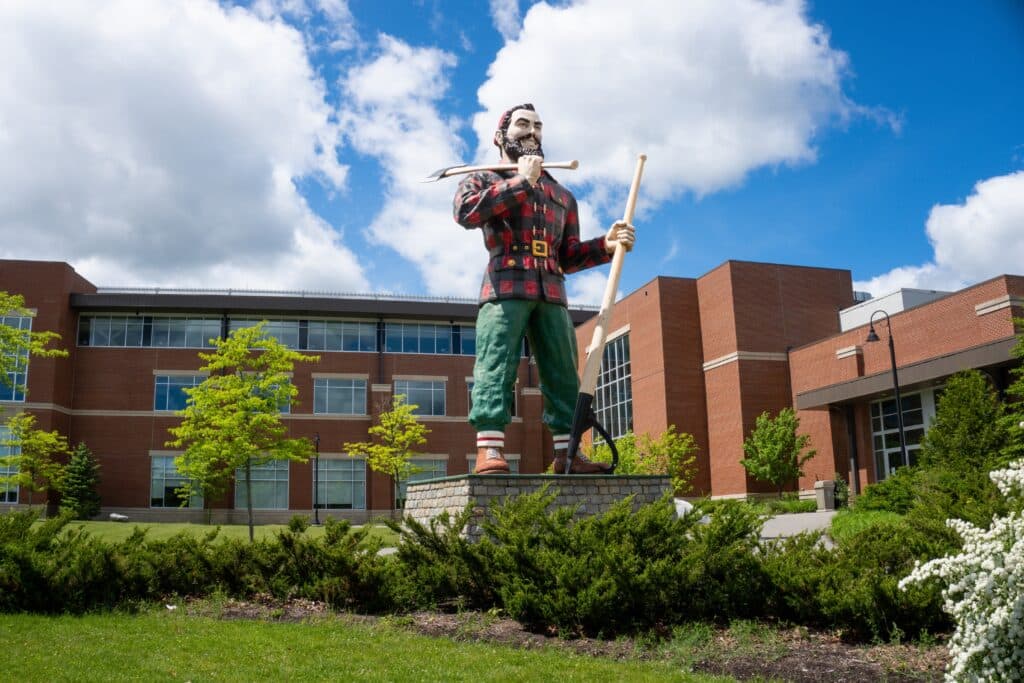
Bangor’s cultural legacy is shaped as much by imagination as industry. It is closely associated with Stephen King, whose presence underscores the city’s literary undercurrent—a place where storytelling emerges naturally from atmosphere and isolation.
The river remains central. It carries history downstream, linking inland logging routes to maritime trade. Parks and riverwalks soften the city’s edges, offering space for reflection within an urban framework.
Bangor feels transitional by nature—between wilderness and civilization, between labor and creativity. It reflects Maine’s ability to generate culture not despite isolation, but because of it.
6. Moosehead Lake: The Inland Sea
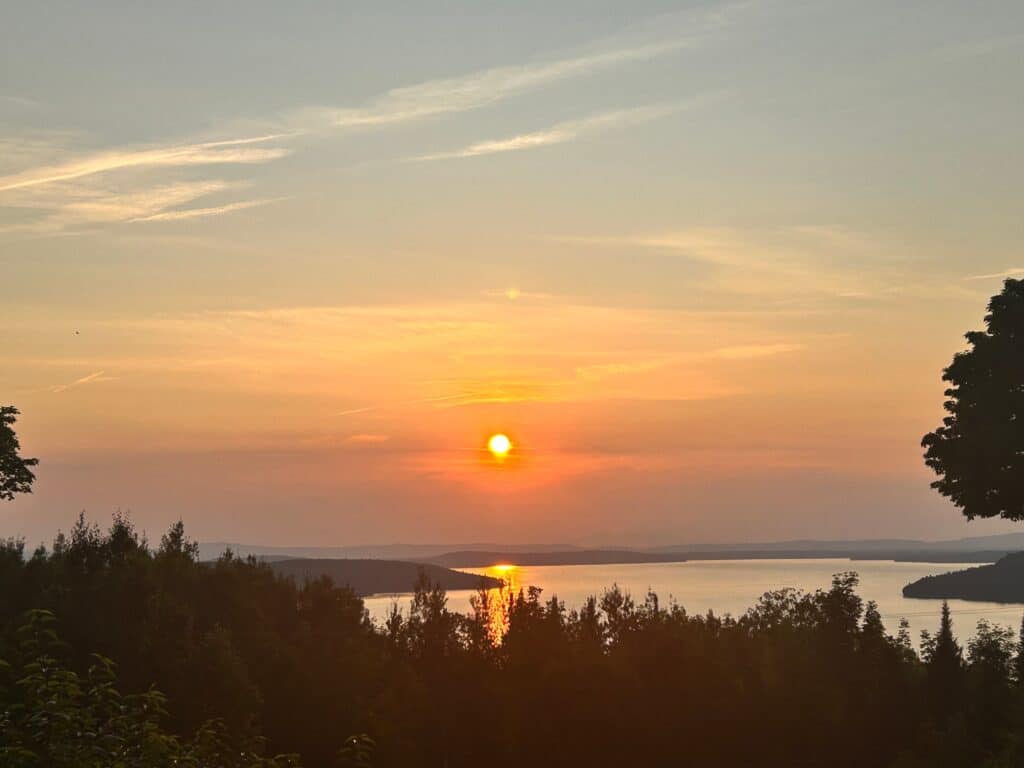
At the heart of northern Maine lies Moosehead Lake, vast and dark, framed by forest and low mountains. It is the state’s largest lake, yet it retains a sense of quiet scale, absorbing sound rather than reflecting it.

The lake has long drawn those seeking immersion—guides, anglers, paddlers, and solitary travelers. Camps dot the shoreline discreetly, maintaining a respectful distance from water and forest alike. Weather governs movement here, reinforcing humility and attentiveness.
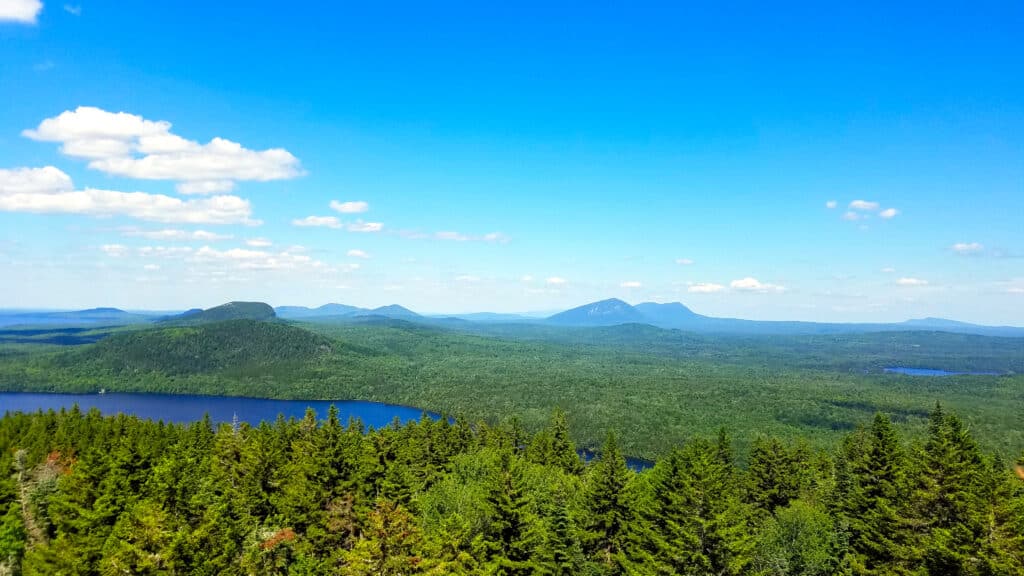
Nearby Mount Kineo rises abruptly from the lake, its cliffs catching light and shadow in dramatic contrast to surrounding stillness. The lake’s waters mirror the sky, often blurring boundaries between above and below.
Moosehead represents Maine’s interior soul—deep, restrained, and contemplative. It is not a destination of spectacle, but of presence, inviting those who arrive to stay long enough to understand silence.
5. The Kennebec River: A Working Waterway
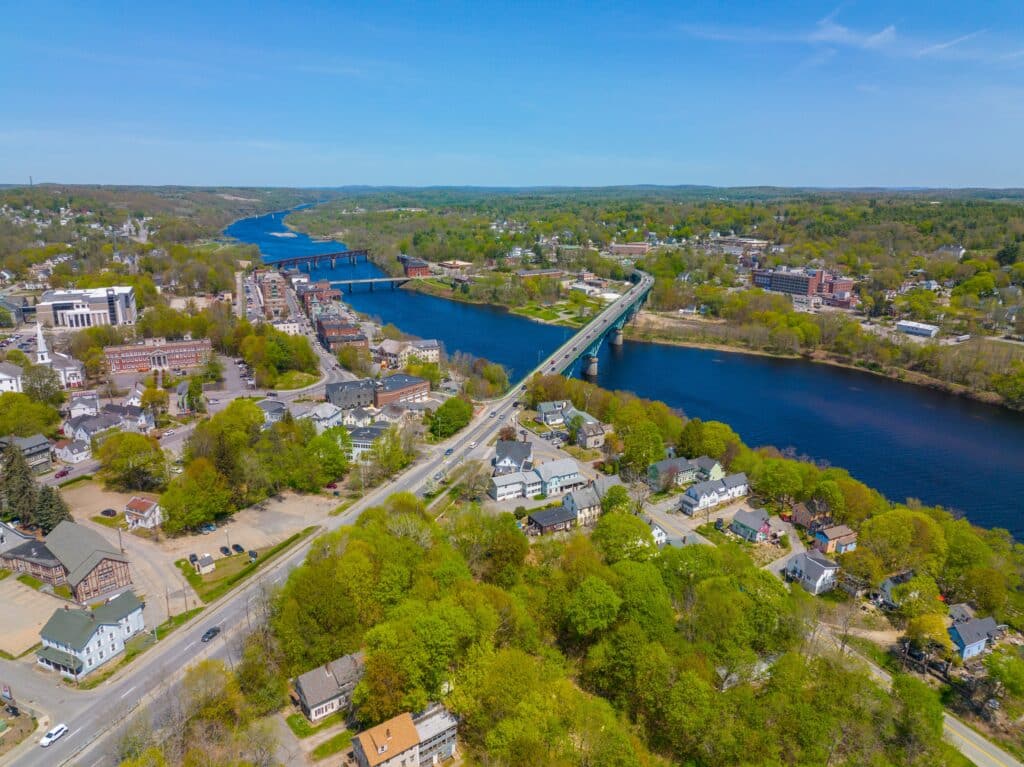
The Kennebec River has long functioned as one of Maine’s central arteries, carrying people, goods, and stories from the interior to the sea. Flowing past towns such as Augusta, Waterville, and Bath, the river binds together political, industrial, and maritime histories.
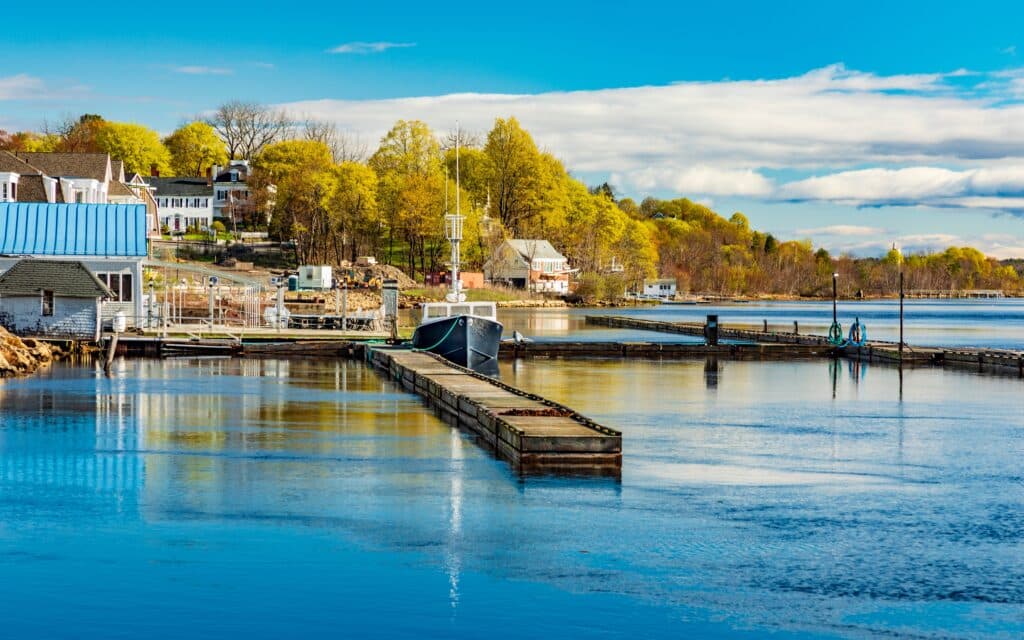
Once crowded with logs during the height of the timber trade, the Kennebec remains a symbol of labor and continuity. Today, its banks host walking trails, restored mills, and quiet residential streets, reflecting a shift from extraction to coexistence.
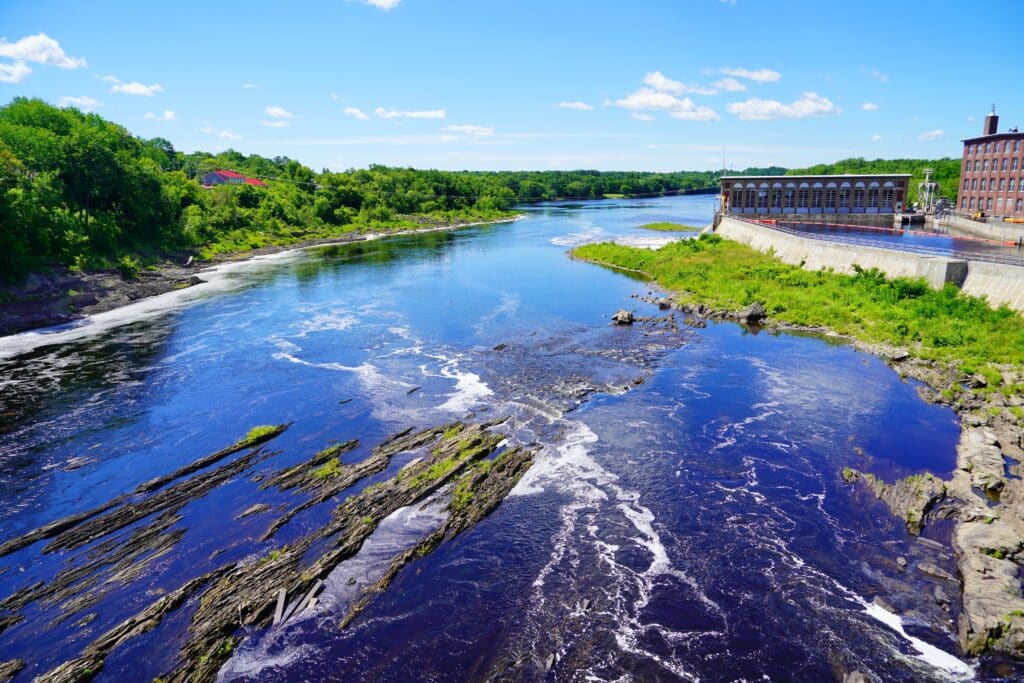
The river’s tidal reach extends far inland, a reminder of Maine’s intimate connection between fresh and salt water. Bald eagles and osprey fish its waters, signaling ecological recovery alongside human adaptation.
The Kennebec reveals Maine as a state shaped by movement—where rivers remain active participants in daily life, not relics of the past.
4. Aroostook County: The Northern Tableland
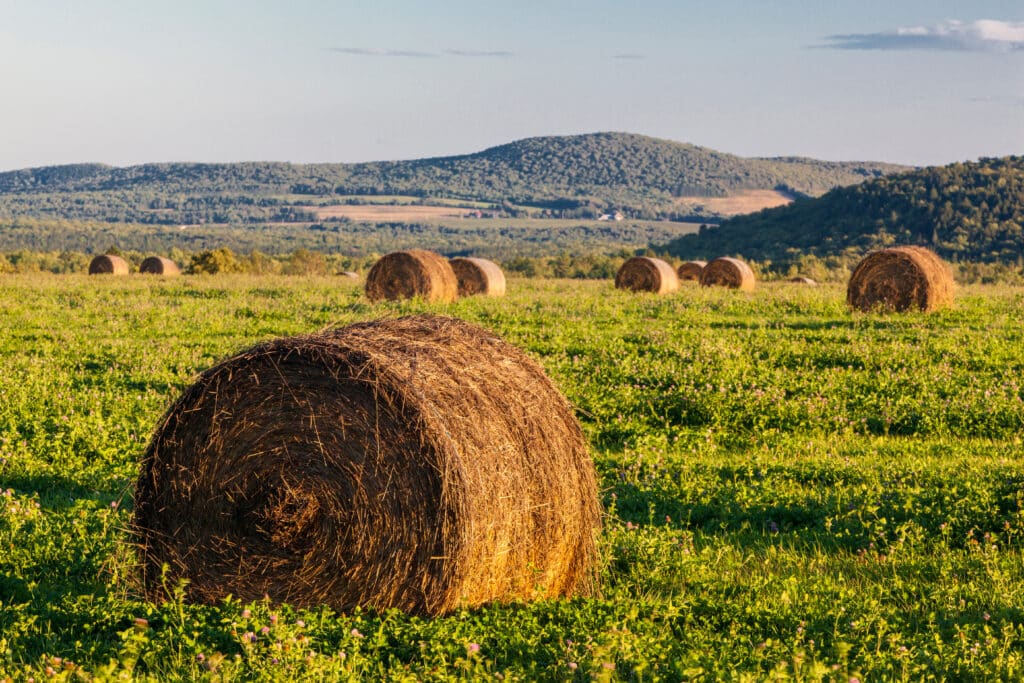
Far north, beyond familiar tourist routes, Aroostook County stretches wide and open beneath expansive sky. Known for potato farming and long winters, the region feels both agricultural and remote, shaped by endurance and routine.
Fields extend in broad, geometric patterns, broken by forests and rivers that cut clean lines through the land. Towns are small, practical, and close-knit, their rhythms governed by season and weather.
Franco-American heritage remains strong here, influencing language, food, and cultural tradition. Winter defines identity as much as summer, reinforcing resilience and mutual reliance.
Aroostook County represents Maine’s quiet strength—a place of work, continuity, and deep-rooted connection to land.
3. York & Southern Maine’s Oldest Shore
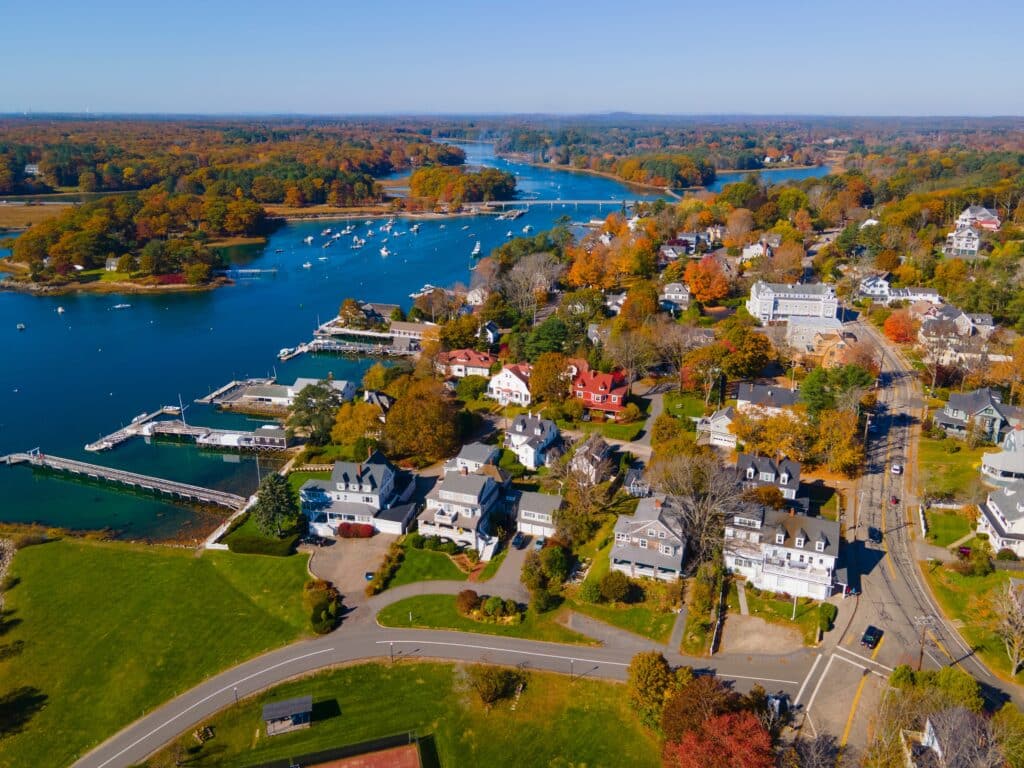
At Maine’s southern edge, York introduces a softer coastline shaped by centuries of settlement. Sandy beaches, rocky headlands, and colonial architecture reflect the state’s oldest European history.

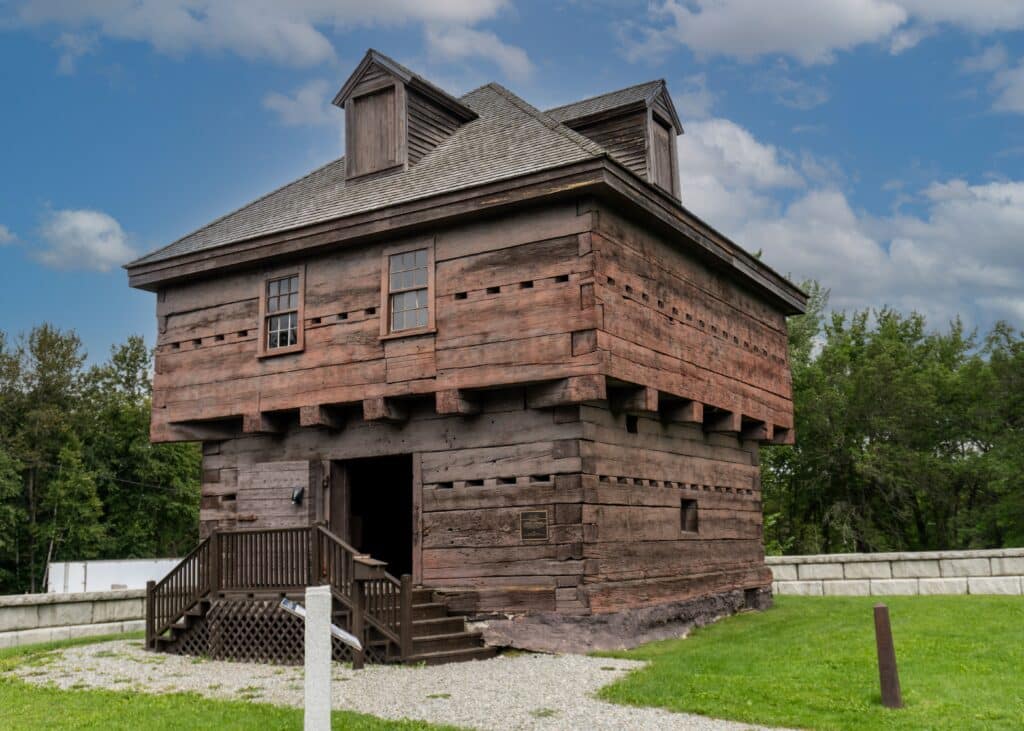
The Nubble Lighthouse stands offshore, a familiar emblem of maritime Maine, while inland villages retain a sense of measured elegance. This region feels more populous, yet still governed by tidal rhythms and seasonal change.
Southern Maine serves as both gateway and contrast—closer to urban New England, yet unmistakably shaped by Maine’s restraint. It offers accessibility without excess, preserving character through continuity.
York and its neighboring towns remind visitors that Maine’s identity is not singular, but layered—shifting gradually from south to north, shore to forest.
2. The Penobscot River: Ancestral Waters
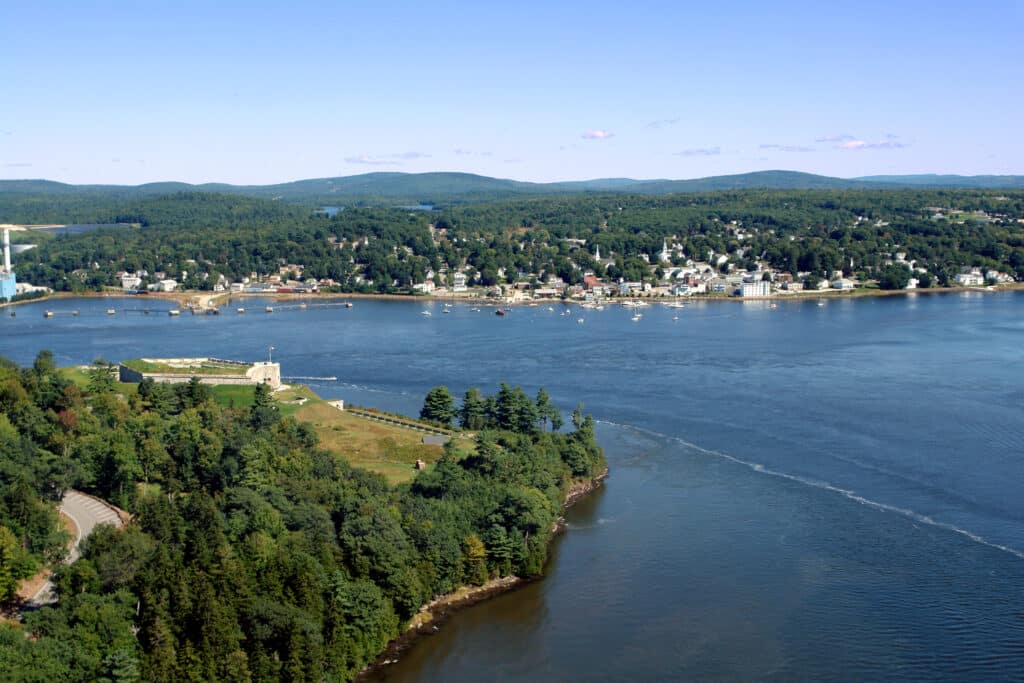
The Penobscot River flows through Maine not only as geography, but as memory. Long before European settlement, it sustained the Penobscot Nation, whose presence continues to shape the cultural and spiritual landscape of the region.
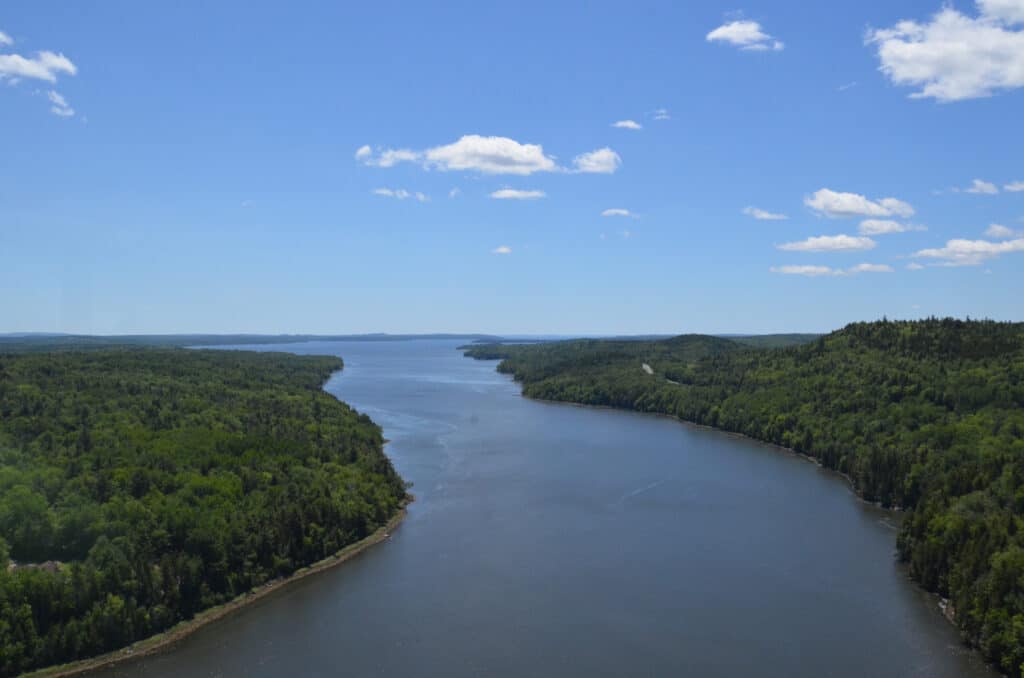
The river’s wide bends and forested banks carry a sense of continuity that transcends recorded history. Fishing camps, villages, and seasonal routes once followed its currents, creating a living relationship between people and water. That relationship endures today through cultural preservation, stewardship, and renewed visibility.
Towns along the Penobscot reflect layered histories—industrial, Indigenous, and ecological—intertwined rather than erased. The river remains central, both as a natural system and as a symbol of belonging.
To follow the Penobscot is to understand Maine as a place where history is not static, but flowing—persistent, adaptive, and deeply rooted.
1. Castine: A Peninsula of Memory
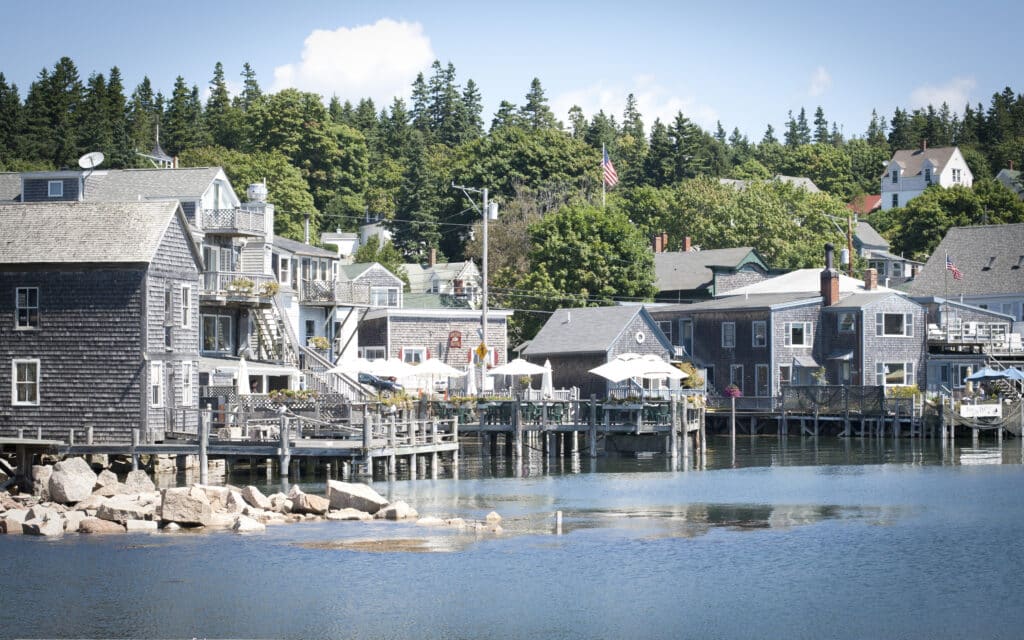
Set gracefully along Penobscot Bay, Castine feels suspended between eras. Once contested by colonial powers, the town bears architectural and cultural traces of French, British, and American influence.
Its narrow streets and well-preserved homes reflect deliberate continuity rather than restoration. Maine Maritime Academy anchors the town in the present, linking Castine’s seafaring past to contemporary global navigation.
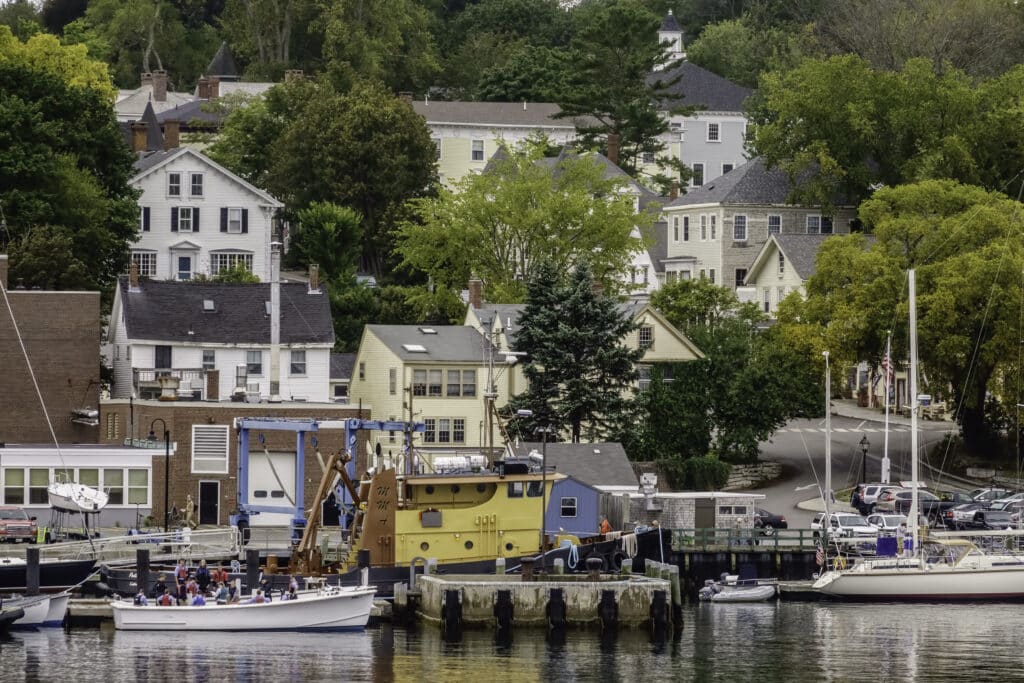
The harbor is calm, reflective, and dignified. Sailboats rest quietly at anchor, while the surrounding hills and water soften the town’s profile. Castine does not announce itself; it invites slow discovery.
This is Maine refined—historically rich, modest in scale, and quietly confident in its sense of place.