
Senegal occupies a unique position on the African continent, both geographically and culturally. Sitting at Africa’s westernmost edge, it is a country shaped by ocean winds, river systems, and centuries of exchange between Africa, Europe, and the wider Atlantic world. This outward-facing geography has made Senegal a place of movement, dialogue, and adaptation rather than isolation.
The Atlantic Ocean defines Senegal’s rhythm. Fishing villages, trading ports, and coastal cities developed through interaction rather than enclosure. Inland, the Senegal and Saloum rivers shaped agriculture, migration, and settlement, creating fertile corridors where communities learned cooperation with seasonal change. These natural systems fostered resilience rooted in balance rather than domination.
Culturally, Senegal is known for cohesion. Despite ethnic and religious diversity, social harmony remains a defining strength. Islam, Christianity, and traditional belief systems coexist through mutual respect, reinforced by strong communal values and extended family networks. Hospitality is not ceremonial here; it is foundational.
Music, poetry, and oral tradition hold exceptional importance. Griots preserve history through sound and storytelling, ensuring memory remains alive rather than archived. Rhythm becomes language, linking past and present across generations.
Colonial history left deep marks, particularly in urban centers, yet Senegal emerged with a strong sense of identity. Independence did not erase complexity; it organized it. Education, intellectual life, and political dialogue became central to national character.
Travel in Senegal feels human-scaled. Distances are manageable, interactions immediate, and daily life accessible. The country does not overwhelm with spectacle, but reveals depth through presence.
16. Dakar: Pulse of the Atlantic
Dakar rises on the Cap-Vert Peninsula as one of Africa’s most dynamic coastal capitals, shaped by ocean currents, cultural intensity, and political presence. Surrounded by the Atlantic on three sides, the city lives outward, responding constantly to movement, sound, and exchange.
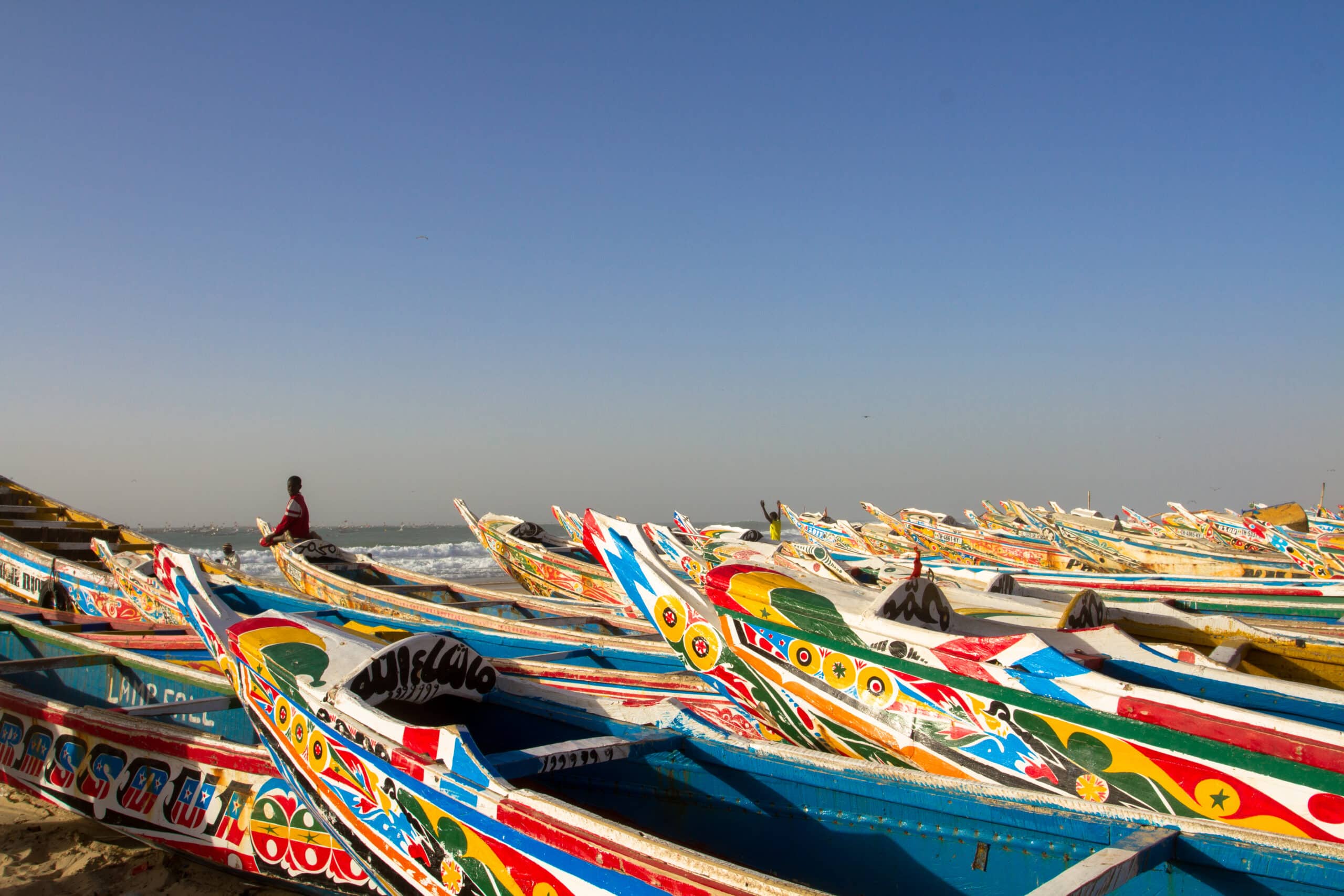
The sea defines Dakar’s identity. Fishermen launch brightly painted pirogues at dawn, while waves crash against volcanic rock along the Corniche. This relationship with water anchors daily life, reinforcing rhythm and resilience.
Dakar is also Senegal’s cultural engine. Music studios, art galleries, fashion houses, and literary circles thrive here, producing influence that extends far beyond national borders. Hip-hop, mbalax, and contemporary art reflect a city that processes tradition through innovation rather than replacement.
Historic districts reveal layered memory. Colonial-era buildings, markets, and mosques coexist within dense neighborhoods where social interaction dominates public space. Dakar’s intensity comes from proximity—people, ideas, and histories constantly intersect.
Politically, the city represents stability and dialogue. Institutions, universities, and civic spaces foster debate, reinforcing Senegal’s reputation for democratic continuity.
Despite its scale, Dakar remains personal. Conversations happen easily, hospitality feels instinctive, and energy never eclipses warmth.
Dakar embodies Senegal’s modern expression. It is a city that absorbs the world without losing itself, standing confident at Africa’s western edge—restless, creative, and deeply rooted.
15. Gorée Island: Memory Across Water
Gorée Island sits just offshore from Dakar as one of West Africa’s most powerful sites of memory. Small in size yet immense in meaning, it stands as a symbol of the transatlantic slave trade and its enduring human legacy.
Colorful colonial houses line narrow streets, their beauty contrasting sharply with the island’s painful history. The Maison des Esclaves remains the most visited site, where stone rooms and the Door of No Return confront visitors with physical evidence of forced displacement.
Gorée’s power lies in restraint. There is no spectacle, only quiet confrontation. Silence fills courtyards where suffering once unfolded, allowing reflection rather than narration to shape understanding.
Today, the island supports a small residential community. Art studios, schools, and daily life continue amid remembrance, reinforcing that memory and living culture are not opposites.
Gorée teaches that acknowledgment is a form of respect. By preserving truth without embellishment, it transforms trauma into responsibility.
The island remains essential not as a destination, but as a reckoning—linking Africa, diaspora, and shared human accountability across water and time.
14. Saint-Louis: Elegance at the River’s End
Saint-Louis stretches along the Senegal River near the Mauritanian border as a city shaped by water, refinement, and historical layering. Once the capital of French West Africa, it retains an architectural grace unlike any other city in the region.
Bridges connect the island city to the mainland, reinforcing its identity as a place between worlds. Pastel facades, iron balconies, and wide streets recall colonial planning, softened by African rhythm and color.
The river shapes daily life. Fishing, transport, and agriculture remain central, while seasonal flooding reinforces adaptation rather than resistance.
Saint-Louis is also a cultural center. Jazz festivals, literary gatherings, and artistic communities thrive, maintaining intellectual legacy through expression.
The city moves slowly, favoring contemplation over urgency. This pace preserves atmosphere, allowing history to breathe.
Saint-Louis represents Senegal’s reflective side. It is elegant without excess, historic without stagnation—proof that continuity can be graceful.
13. Lac Rose (Lake Retba): Color and Labor
Lac Rose lies northeast of Dakar as a shallow lake whose striking pink hue shifts with sunlight and salinity. This natural phenomenon is caused by algae responding to high salt concentration, turning water into color.
Salt harvesting defines the lake’s human story. Workers enter daily, extracting salt by hand using traditional methods passed through generations. The labor is demanding, disciplined, and essential.
Mounds of white salt line the shore, contrasting sharply with pink water and blue sky. This visual intensity reflects a deeper truth: survival through cooperation with environment rather than control.
Lac Rose represents Senegal’s relationship with work and land. It shows dignity rooted in effort, and beauty emerging from function.
The lake completes Senegal’s portrait by revealing that even the most unexpected landscapes can sustain life, culture, and meaning.
12. Casamance: Green South, Gentle Difference
Casamance stretches across southern Senegal as a region defined by water, forest, and a slower, more inward rhythm. Separated geographically from the rest of the country by The Gambia, it developed a distinct character shaped by rivers, rice fields, and dense vegetation.
The Casamance River and its tributaries form the backbone of the region. Mangroves, palm groves, and wetlands support agriculture and fishing, while villages align themselves along waterways rather than roads. Life here follows seasonal cycles, guided by rainfall and harvest.
Culturally, Casamance is deeply rooted in tradition. The Diola people maintain strong ties to land, ancestry, and communal decision-making. Sacred forests, initiation rites, and collective labor remain central to social organization. Christianity, Islam, and traditional beliefs coexist without tension, reinforcing tolerance as lived practice.
Music and dance are integral expressions of identity. Rhythms echo through ceremonies and daily gatherings, reinforcing connection rather than performance. Craftsmanship, particularly in wood and weaving, reflects functional beauty shaped by environment.
Casamance feels intimate. Distances are short, interactions personal, and hospitality instinctive. Unlike Senegal’s urban centers, the region does not seek visibility; it values continuity.
Casamance represents Senegal’s ecological heart. It shows how abundance, when respected, sustains both land and culture. Here, Senegal turns inward, revealing gentleness as strength and diversity as cohesion.
11. Sine-Saloum Delta: Where Water Teaches Balance
The Sine-Saloum Delta spreads across western Senegal as a vast network of rivers, islands, and mangrove forests where land dissolves gradually into water. Designated a UNESCO Biosphere Reserve, it is one of the country’s most ecologically and culturally complex regions.
Tides govern life here. Fishing communities adapt to the rhythm of rising and falling water, navigating channels that shift with season and salinity. Mangroves protect shorelines, shelter fish nurseries, and support livelihoods, illustrating nature’s role as infrastructure.
The delta is home to Serer communities whose traditions emphasize harmony with environment. Sacred sites, burial mounds, and ritual practices connect ancestry directly to landscape, reinforcing stewardship through belief.
Birdlife dominates the sky, while shellfish harvesting shapes the shore. Villages are built low and simple, designed to coexist with flooding rather than resist it. This acceptance defines the delta’s philosophy.
Movement through Sine-Saloum is slow and deliberate. Canoes replace roads, and silence often replaces speech. The experience invites observation rather than consumption.
Sine-Saloum represents Senegal’s wisdom of balance. It demonstrates how human survival strengthens when ecosystems are allowed to function fully. The delta does not overwhelm; it teaches. In its interwoven waters, Senegal reveals that sustainability is not a concept, but a practiced way of life.
10. Touba: City of Faith and Discipline
Touba rises from central Senegal as a city built entirely around spiritual purpose. Founded in the late nineteenth century by Sheikh Amadou Bamba, it is the heart of the Mouride brotherhood, one of West Africa’s most influential Islamic movements.
The Great Mosque of Touba dominates the city, its minarets visible from miles away. More than an architectural landmark, it represents discipline, humility, and devotion. Pilgrims arrive year-round, and in vast numbers during the Grand Magal, one of the largest religious gatherings in Africa.
Touba operates under unique principles. Alcohol is prohibited, and commerce aligns with ethical values rooted in faith. Work is considered worship, reinforcing productivity as spiritual responsibility rather than obligation.
The city’s organization reflects collective purpose. Infrastructure, education, and charity function through religious networks that emphasize mutual support. Authority here is moral rather than political.
Touba represents Senegal’s spiritual center. It shows how belief can shape urban space without force, creating cohesion through shared values. The city stands as a reminder that faith, when practiced through service and discipline, can structure society with remarkable stability and resolve.
9. Joal-Fadiouth: Island of Coexistence
Joal-Fadiouth lies along Senegal’s Petite Côte as a twin settlement where land and water, history and harmony, converge. Joal sits on the mainland, while Fadiouth rests on an island constructed almost entirely from seashells, connected by a narrow bridge.
The shell island is both geological and cultural. Generations of shellfish harvesting accumulated into land, transforming labor into landscape. Streets, cemeteries, and foundations are formed from this material memory.
Fadiouth is known for religious coexistence. Muslim and Christian communities share space, rituals, and burial grounds, embodying Senegal’s tradition of tolerance in tangible form. Respect is not symbolic here—it is practiced daily.
Fishing sustains life, while communal responsibility governs resource use. Mangroves protect the shoreline, and harvesting follows inherited knowledge.
Joal-Fadiouth represents Senegal’s social harmony. It shows how cooperation, belief, and environment can align without conflict. In its quiet balance, the village offers one of the country’s most powerful lessons: coexistence, when lived sincerely, becomes architecture.
8. Kédougou and the Fouta Djalon Foothills: Senegal’s Wild Southeast
Kédougou lies in southeastern Senegal near the borders with Guinea and Mali, marking a dramatic shift in landscape and atmosphere. Here, rolling savannah gives way to rocky hills, waterfalls, and forested valleys that feel closer to Central Africa than the Atlantic coast.
The region is shaped by elevation and water. Rivers cut through red earth, forming cascades such as Dindefelo Falls, where cool pools collect beneath sheer cliffs. These natural features create pockets of biodiversity and refuge, supporting wildlife and agriculture in an otherwise demanding environment.
Culturally, Kédougou is home to diverse communities, including the Bassari people, whose traditions are among the oldest in Senegal. Initiation rituals, masked dances, and seasonal ceremonies reinforce identity through continuity rather than display. Many of these practices are protected as intangible cultural heritage.
Villages here remain closely tied to land. Farming, foraging, and craftwork reflect subsistence balanced with respect for natural limits. Modern infrastructure remains minimal, preserving authenticity and ecological integrity.
Kédougou represents Senegal’s raw interior. It reveals a country not defined solely by coast and trade, but by ancestral landscapes where culture and nature remain inseparable. In this southeastern corner, Senegal speaks through stone, forest, and ritual—quietly resilient and deeply rooted.
7. Kaolack: Market City of Movement
Kaolack stands along the Saloum River as one of Senegal’s most important commercial centers, defined by exchange, mobility, and connection. Though often overlooked by visitors, it plays a crucial role in linking agricultural regions with national and regional markets.
The city’s energy comes from trade. Peanuts, grains, livestock, and salt pass through Kaolack daily, creating a rhythm shaped by transport and negotiation. Markets dominate urban life, functioning as social hubs as much as economic engines.
Kaolack’s population reflects Senegal’s diversity. Traders, farmers, transport workers, and religious communities coexist in dense proximity. Mosques, churches, and markets share space, reinforcing tolerance through daily interaction rather than ideology.
The Saloum River anchors the city geographically and symbolically. Historically, it facilitated commerce and migration, shaping Kaolack’s outward-facing character. Today, it remains a reminder of movement as foundation.
Kaolack represents Senegal’s working heart. It is not polished or performative, but essential. The city demonstrates how commerce, when embedded in social networks, sustains cohesion. Kaolack shows Senegal in motion—practical, interconnected, and quietly indispensable.
6. Niokolo-Koba National Park: Savannah of Scale
Niokolo-Koba National Park stretches across southeastern Senegal as one of West Africa’s largest protected savannah ecosystems. Rivers, woodlands, and open grasslands combine to support a wide range of wildlife, including antelope, primates, and large predators.
The park’s vastness defines its character. Distances are long, encounters unpredictable, and silence expansive. Unlike more condensed reserves, Niokolo-Koba requires patience, rewarding attention rather than expectation.
Seasonal rivers such as the Gambia and Niokolo shape migration patterns and vegetation. Wildlife responds to water availability, reinforcing the park’s dynamic nature. Nothing here is static; survival depends on movement.
Conservation challenges exist, but protection efforts emphasize scale and continuity. The park remains critical not only for biodiversity, but for ecological stability across the region.
Niokolo-Koba represents Senegal’s wild dimension. It shows how space itself becomes a conservation tool, allowing ecosystems to function without constant intervention. The park reminds visitors that wilderness does not perform—it persists.
5. Mbour and the Petite Côte: Everyday Atlantic Life
Mbour lies along Senegal’s Petite Côte as a working coastal city where fishing, trade, and community define daily rhythm. Unlike resort-driven coastal towns, Mbour remains grounded in livelihood rather than leisure.
Fishing dominates the shoreline. Boats arrive daily with catches unloaded, sorted, and sold through coordinated effort. This collective labor sustains families and reinforces identity tied to the sea.
Markets, neighborhoods, and mosques extend inland, forming a city shaped by function rather than form. Social interaction fills streets, reinforcing connection through proximity.
The Petite Côte surrounding Mbour balances accessibility with authenticity. Beaches coexist with villages, allowing visitors to observe life rather than escape it.
Mbour represents Senegal’s lived coastline. It shows how the Atlantic is not only scenic, but sustaining. Here, the sea feeds community, culture, and continuity—completing Senegal’s portrait with grounded resilience.
4. Thiès: Crossroads of Craft and Movement
Thiès sits inland from Dakar as a city defined by connection rather than destination. Long regarded as Senegal’s transportation and industrial crossroads, it links the capital to the interior, shaping its identity around movement, labor, and exchange.
Railways and roads converge here, historically supporting peanut trade, manufacturing, and migration. This infrastructure fostered a practical city culture where work, mobility, and resilience dominate daily life. Thiès does not pause for display; it functions with purpose.
The city is also a center of craftsmanship. Weaving, textile dyeing, and metalwork thrive in neighborhoods where skill is passed through family lines. Artisanal production remains rooted in utility, reinforcing pride in creation that serves community rather than export alone.
Culturally, Thiès balances modernity with continuity. Markets anchor social life, mosques structure daily rhythm, and music and storytelling circulate organically. The city’s pace is steady, shaped by responsibility rather than ambition.
Nearby quarries and plateaus reveal geological character, while surrounding villages maintain agricultural ties. This relationship between city and countryside reinforces interdependence rather than separation.
Thiès represents Senegal’s connective tissue. It shows how places built around movement can still sustain identity and belonging. In its quiet industriousness, Thiès reminds us that progress often happens between destinations, shaped by people who keep systems moving without seeking recognition.
3. Bandia Reserve: Wildlife in Human Proximity
Bandia Reserve lies south of Dakar as a carefully managed wildlife sanctuary demonstrating how conservation can coexist with dense human settlement. Though modest in size, the reserve holds symbolic importance as a model of protection through intention.
Acacia savannah, baobabs, and open grasslands support giraffes, antelope, rhinoceros, and birdlife reintroduced through conservation programs. The landscape feels open and approachable, offering visibility rather than immersion.
Bandia’s purpose is educational as much as ecological. Its proximity to urban centers allows accessibility, introducing wildlife awareness to populations who may otherwise be disconnected from natural heritage.
Management emphasizes balance. Controlled tourism funds protection while limiting pressure, reinforcing that preservation is a process rather than a spectacle.
Bandia represents Senegal’s pragmatic environmental vision. It shows that conservation need not be remote to be effective. In creating space for wildlife within reach of cities, the reserve demonstrates that responsibility begins where people live, not only where wilderness feels distant.
2. Podor: River Town of Northern Memory
Podor rests along the Senegal River in the country’s far north, shaped by water, trade, and frontier history. Once a key river port and colonial outpost, it remains deeply connected to movement and memory.
The river defines Podor’s rhythm. Agriculture, fishing, and transport depend on its seasonal cycles, reinforcing adaptation rather than control. Floodplains nourish crops, sustaining life in an otherwise arid environment.
Architectural remnants, including old forts and warehouses, speak to layered histories of trade and resistance. Yet Podor’s strength lies not in preservation alone, but in continuity of river-based living.
The town maintains strong cultural traditions tied to Fulani heritage. Oral history, music, and pastoral values remain active, shaping social organization and identity.
Podor represents Senegal’s northern anchor. It reflects a country whose boundaries are defined not by isolation, but by exchange along natural corridors. The town shows how rivers carry not only goods, but memory and resilience across generations.
1. Somone Lagoon: Quiet Ecology on the Petite Côte
Somone Lagoon lies along Senegal’s Petite Côte as a protected wetland where mangroves, water, and birdlife create a pocket of calm between coastal towns. Designated a nature reserve, it reflects Senegal’s commitment to safeguarding fragile ecosystems.
Tidal channels shape the lagoon’s ecology. Fish nurseries, bird migrations, and mangrove regeneration depend on this delicate balance. Canoes glide quietly, reinforcing low-impact interaction.
Local communities participate directly in protection. Fishing restrictions, guided access, and environmental education ensure that livelihood and preservation align rather than conflict.
Somone Lagoon offers stillness rather than drama. It invites observation—of light shifting across water, of birds lifting at dusk, of life sustained through restraint.
The lagoon completes Senegal’s portrait by showing that conservation can be intimate. Here, care is practiced daily, quietly, and collectively. Somone demonstrates that when ecosystems are respected at human scale, sustainability becomes lived experience rather than policy.