
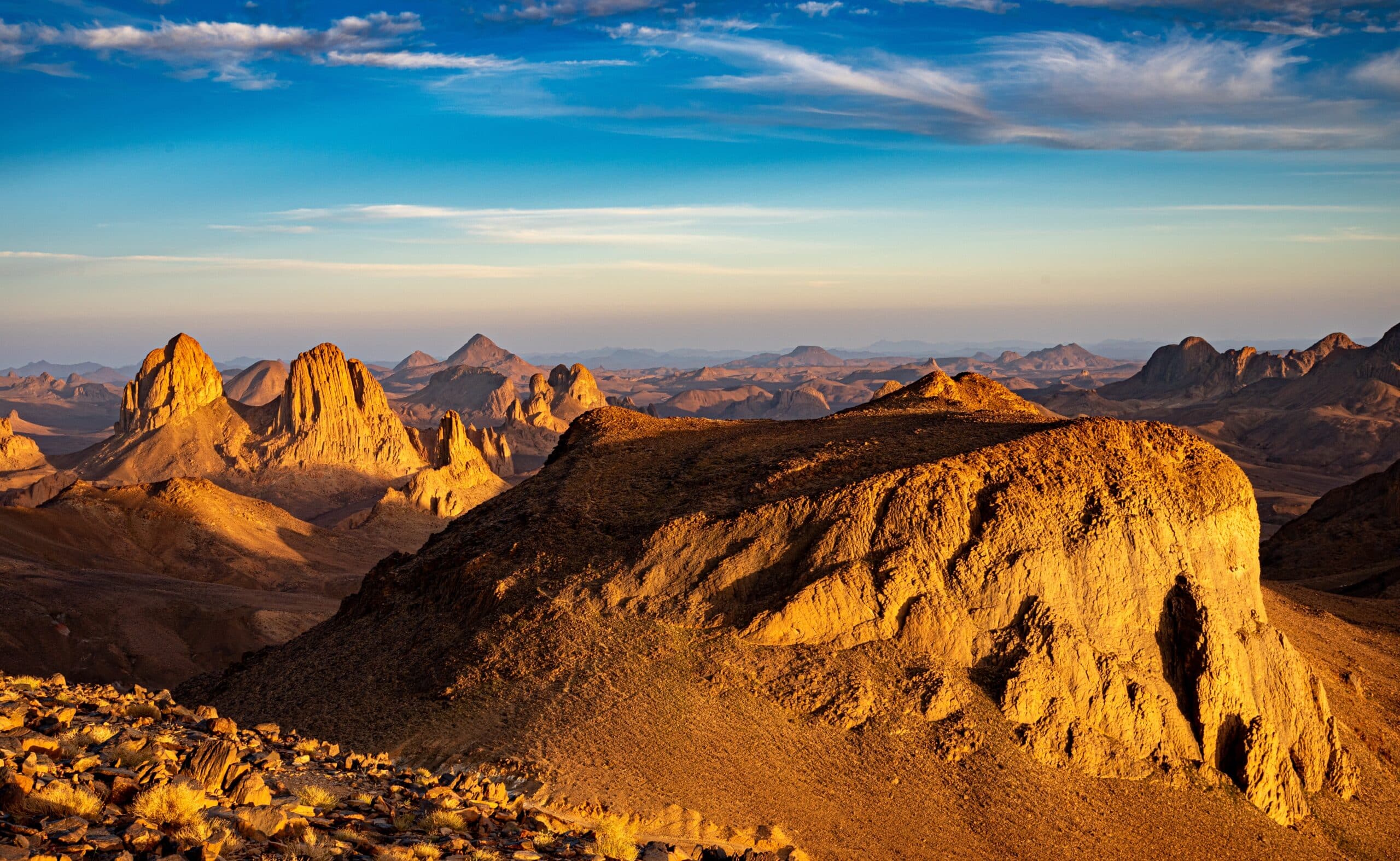
Algeria is a land of vast horizons and quiet grandeur, a country whose scale, history, and natural beauty inspire awe at every turn. As the largest nation in Africa, Algeria unfolds across Mediterranean shores, fertile plains, towering mountains, and an immense Sahara that seems to stretch into infinity. Yet despite its size and depth, Algeria remains one of the most underexplored destinations in the world, making every journey feel deeply personal and profoundly rewarding.
This is a country shaped by civilizations that rose, blended, and endured. From Amazigh roots and Roman legacies to Arab-Islamic culture and Ottoman influence, Algeria’s identity is layered and resilient. Its cities carry the echoes of ancient empires, while its villages preserve traditions shaped by land, climate, and community. History here is not confined to monuments; it is embedded in daily life, language, music, and hospitality.
Algeria’s landscapes are nothing short of monumental. The Mediterranean coastline offers calm beauty and soft light, while the Atlas Mountains carve dramatic silhouettes across the north. Beyond them lies the Sahara, a desert of extraordinary diversity—rock plateaus, sand seas, hidden oases, and prehistoric art that tells stories thousands of years old. In these vast spaces, silence becomes meaningful, and scale reshapes perspective.
What makes Algeria truly unforgettable is its authenticity. Life moves at its own pace, guided by tradition and human connection rather than spectacle. Visitors are welcomed with sincerity, often invited to share coffee, meals, and stories that bridge cultures effortlessly. Algeria does not rush to impress; it reveals itself slowly, rewarding those willing to listen, observe, and feel.
This article explores some of the best places in Algeria—destinations that reflect the country’s soul through history, nature, and living culture. Together, they form a journey into a land of depth, dignity, and enduring beauty.
16. Cherchell: Echoes of Caesarea
Cherchell rests quietly along Algeria’s Mediterranean coast, a town where layers of antiquity lie just beneath the surface of daily life. Once known as Caesarea, the capital of the ancient Kingdom of Mauretania, Cherchell was among the most important cities of the Roman world in North Africa. Today, its calm streets and seaside atmosphere conceal a remarkably rich past.
Roman columns rise unexpectedly between modern buildings, reminding visitors that this was once a center of power, culture, and learning. The archaeological museum houses exquisite statues, mosaics, and artifacts that reflect the city’s former grandeur and artistic refinement. These remnants speak of an era when Cherchell was deeply connected to the Mediterranean world.
The sea remains central to the town’s identity. Gentle waves lap against the shore, and fishing boats drift calmly in the harbor, maintaining a rhythm that has endured for centuries. Cafés overlooking the water invite reflection, blending the present moment with historical awareness.
Cherchell’s beauty lies in its quiet dignity. It does not present itself as a grand ruin or monumental destination, but rather as a living town shaped by memory. Walking here feels intimate, as if history and modern life are sharing the same breath. Cherchell offers a subtle yet profound experience—one where the past is not staged, but naturally present.
15. Tipaza: Stone, Sea, and Silence
Tipaza unfolds along the Mediterranean like a poetic conversation between stone and sea. This ancient Roman city, now a UNESCO World Heritage site, is among Algeria’s most evocative destinations, not for its scale, but for its atmosphere. Ruins rest gently among grass and wildflowers, framed by open skies and endless blue water.
Columns, basilicas, and theaters stand partially reclaimed by nature, creating a sense of peaceful abandonment rather than decay. Walking through Tipaza feels meditative, accompanied by sea breezes and the distant sound of waves. The ruins do not dominate the landscape—they belong to it.
Writer Albert Camus famously found deep meaning here, drawn by the harmony between history and nature. That harmony remains intact, offering visitors a rare emotional clarity. The site invites stillness, reflection, and presence rather than hurried exploration.
Beyond the ruins, modern Tipaza remains calm and welcoming, with seaside cafés and quiet neighborhoods shaped by the same Mediterranean light. The town feels open and unpretentious, grounded in its setting rather than defined by tourism.
Tipaza is not about grandeur; it is about balance. It shows how civilizations leave traces that can coexist gently with nature, time, and silence. Few places in Algeria express this sense of peaceful continuity as powerfully as Tipaza.
14. Taghit: Oasis of Golden Silence
Taghit rises from the edge of the Sahara like a vision of calm and resilience. Located in southwestern Algeria, this desert oasis is framed by vast sand dunes that glow gold at sunrise and deepen to amber as the day fades. Palm groves line the riverbed, creating a striking contrast between life and desert emptiness.
The old ksar of Taghit clings to rocky hillsides, its earthen architecture blending seamlessly into the landscape. Narrow pathways and ancient walls speak of generations who adapted to desert conditions with ingenuity and communal strength. Life here follows the rhythm of water, shade, and survival.
The dunes surrounding Taghit are among the most beautiful in Algeria, sculpted by wind into smooth, endless waves. Silence dominates the space, broken only by footsteps or the distant sound of the wind. At night, the sky opens fully, revealing stars with astonishing clarity.
Taghit offers perspective. It strips away distraction and excess, leaving only essentials—light, space, and time. The oasis is not merely a place to visit; it is a place to feel. Taghit captures the Sahara’s quiet wisdom, reminding travelers that beauty often emerges from simplicity and endurance.
13. Tlemcen: Andalusian Grace and Sacred Heritage
Tlemcen is one of Algeria’s most elegant cities, shaped by scholarship, spirituality, and Andalusian refinement. Located in the northwest near the Moroccan border, it has long been a center of culture, learning, and artistic expression. Often called the “Pearl of the Maghreb,” Tlemcen carries its beauty with quiet confidence.
The city’s architectural heritage reflects a rich blend of Amazigh, Arab, and Andalusian influences. Mosques, madrasas, and palaces display refined proportions, carved stucco, and intricate tilework that echo the aesthetics of medieval Al-Andalus. The Great Mosque of Tlemcen stands as one of the finest examples of Almoravid architecture in North Africa.
Beyond the city, lush gardens, waterfalls, and green valleys soften the surrounding landscape, offering moments of calm and reflection. Music, poetry, and scholarship remain deeply embedded in Tlemcen’s identity, shaping a cultural life grounded in depth rather than spectacle.
Tlemcen feels introspective and dignified. It invites appreciation rather than urgency, rewarding those who move slowly and observe carefully. This is a city where beauty is measured in harmony, knowledge, and spiritual presence—a place that reveals Algeria’s refined and contemplative soul.
12. Algiers: The White City Over the Sea
Algiers rises gracefully along the Mediterranean, a city of light, contrast, and layered identity. Known as El Bahdja, “the Joyful,” it blends Ottoman heritage, colonial architecture, and modern life within a dramatic coastal setting. White buildings cascade down hills toward the sea, giving the city its poetic nickname, Algiers the White.
At its heart lies the Casbah, a UNESCO World Heritage site and one of North Africa’s most evocative historic quarters. Narrow alleys wind past centuries-old houses, mosques, and hidden courtyards that reflect Ottoman craftsmanship and communal living. The Casbah is not merely preserved—it is alive, carrying the spirit of resistance, faith, and cultural continuity.
Beyond the old city, wide boulevards and elegant buildings recall the French colonial era, creating striking architectural contrasts. Cafés overlooking the sea invite quiet reflection, while museums and cultural centers highlight Algeria’s artistic and revolutionary legacy.
Algiers is a city of thought and memory. It invites visitors to observe rather than rush, to understand rather than consume. With its gentle Mediterranean rhythm and deep historical resonance, Algiers offers a powerful introduction to Algeria’s character.
11. Tipasa: Where Ruins Meet the Sea
Tipasa is one of Algeria’s most poetic destinations, a place where ancient history unfolds beside the endless blue of the Mediterranean. Located west of Algiers, this coastal site preserves remarkable Roman ruins set against a serene natural backdrop.
Columns, amphitheaters, and basilicas rise gently from grassy fields, overlooking the sea as they have for nearly two thousand years. Walking through Tipasa feels meditative, as waves lap softly below and time seems to dissolve. The ruins speak of a once-thriving Roman city, shaped by trade, culture, and maritime life.
French writer Albert Camus found deep inspiration here, drawn to the harmony between nature and stone. That balance remains intact today, offering visitors a rare sense of peace and continuity. The surrounding landscape, dotted with wildflowers and sea breezes, enhances the site’s quiet beauty.
Tipasa is not overwhelming in scale, but it is profound in atmosphere. It reminds travelers that history can be gentle, reflective, and deeply human.
10. Constantine: City of Bridges and Depth
Constantine is one of Algeria’s most dramatic cities, suspended between sky and stone. Built atop deep gorges carved by the Rhumel River, it is famously known as the City of Bridges. These elegant structures span vast chasms, connecting neighborhoods while offering breathtaking views below.
The city’s setting alone is unforgettable, but Constantine’s cultural depth is equally compelling. As a historic center of learning and spirituality, it has long been associated with scholarship, music, and intellectual life. Mosques, palaces, and traditional homes reflect a refined urban heritage shaped by centuries of continuity.
Walking through Constantine reveals layers of history—from Roman foundations to Ottoman influence and modern Algerian life. The rhythm here is contemplative, shaped by elevation, silence, and perspective.
Constantine inspires awe not through scale, but through depth. It is a city that teaches balance—between strength and elegance, movement and stillness—leaving a lasting impression on those who cross its bridges.
9. Oran: Algeria’s City of Music and Movement
Oran is a city defined by energy, rhythm, and openness. Situated along the western Mediterranean coast, it carries a vibrant spirit shaped by centuries of cultural exchange. Oran is widely regarded as the birthplace of raï music, a genre that expresses freedom, emotion, and everyday life.
The city’s architecture reflects its diverse past, blending Spanish, Ottoman, and French influences. Fort Santa Cruz rises above Oran, offering panoramic views of the harbor and sea, while below, streets pulse with cafés, markets, and conversation.
Oran feels alive at all hours. Music drifts through neighborhoods, laughter spills from terraces, and the sea remains a constant presence. The city’s openness and warmth make it immediately engaging, especially for travelers drawn to contemporary culture.
Oran represents Algeria’s expressive soul—a place where tradition evolves, creativity thrives, and life is lived outwardly and passionately.
8. Ghardaïa and the M’Zab Valley: Harmony in the Desert
Ghardaïa lies at the heart of the M’Zab Valley, a UNESCO World Heritage site renowned for its unique urban planning and deep-rooted Ibadi culture. Rising from the desert, its fortified towns are masterpieces of balance, designed to support community, equality, and sustainability.
White and earth-toned buildings cluster around central mosques, forming compact cities that protect inhabitants from heat and isolation. The architecture is purposeful and elegant, reflecting centuries of adaptation to harsh desert conditions.
Life in the M’Zab Valley follows strong social values centered on cooperation, modesty, and respect. Markets are orderly, traditions carefully preserved, and daily life guided by principles passed down through generations.
Ghardaïa offers a rare vision of harmony between humans and environment. It reveals how thoughtful design and shared values can create beauty, resilience, and continuity in even the most challenging landscapes.
7. Timgad: Rome at the Edge of the Desert
Timgad stands as one of the most extraordinary archaeological sites in North Africa, a remarkably preserved Roman city rising from the high plains of eastern Algeria. Founded in the first century by Emperor Trajan, Timgad was designed with perfect symmetry, reflecting Roman ideals of order, governance, and urban life.
Wide stone streets intersect at precise angles, leading to forums, temples, bathhouses, and a grand theater that once echoed with civic gatherings and performances. Walking through Timgad feels astonishingly intimate, as if the city’s pulse has merely paused rather than vanished. The surrounding mountains and open skies add to the sense of timelessness.
The Arch of Trajan still stands proudly at the entrance, symbolizing imperial ambition and architectural mastery. Nearby mosaics and inscriptions reveal everyday Roman life, offering insight into how people lived, worked, and socialized nearly two millennia ago.
Timgad is more than ruins; it is a reminder of Algeria’s central place in ancient global history. Set against a quiet, expansive landscape, it invites reflection on civilization, impermanence, and the enduring human desire to build meaning into space.
6. Djemila: Stone Poetry in the Mountains
Djemila, whose name means “beautiful” in Arabic, lives up to its promise in every sense. Perched high in the mountains, this Roman site unfolds across rolling terrain, blending architecture seamlessly with nature. Unlike rigid city grids, Djemila adapts organically to the landscape, creating a sense of harmony between stone and earth.
Temples, basilicas, and paved streets remain impressively intact, while mosaics depict mythological scenes and daily life with striking clarity. The mountain air, crisp and cool, enhances the contemplative atmosphere, allowing visitors to absorb history at a gentle pace.
Djemila feels introspective rather than monumental. Its beauty lies in proportion, placement, and silence. Standing among columns framed by distant hills, one senses the dialogue between nature and civilization that defines much of Algeria’s heritage.
This site rewards patience and sensitivity, offering an experience that feels both scholarly and deeply emotional.
5. Tassili n’Ajjer: The Desert’s Ancient Memory
Tassili n’Ajjer is one of the most awe-inspiring landscapes in the Sahara, a vast plateau of sandstone formations rising dramatically in southeastern Algeria. Beyond its striking geology, Tassili is renowned for its prehistoric rock art—one of the most important collections in the world.
Thousands of engravings and paintings depict animals, rituals, and daily life dating back over 10,000 years. These images reveal a Sahara that was once green, filled with rivers, wildlife, and human communities. Walking among these stones feels like entering humanity’s earliest memory.
The landscape itself is otherworldly. Towering arches, eroded pillars, and narrow canyons create shifting shapes and shadows that change with the light. Silence dominates, broken only by wind and footsteps.
Tassili n’Ajjer is not easily reached, but the journey is transformative. It offers profound insight into climate, time, and survival, reminding visitors of humanity’s deep connection to the earth.
4. Djanet: Oasis of the Tuareg
Djanet rests quietly at the edge of Tassili n’Ajjer, a desert oasis shaped by water, culture, and endurance. Surrounded by palm groves and dramatic rock formations, it serves as a gateway to one of the Sahara’s most extraordinary regions.
The town is closely tied to Tuareg culture, known for its hospitality, music, and distinctive blue garments. Daily life here unfolds calmly, guided by desert rhythms and ancestral knowledge.
Markets offer handmade jewelry, leather goods, and textiles, while nearby desert excursions reveal hidden canyons and ancient art. At night, the sky opens fully, offering stars of rare clarity.
Djanet is a place of welcome and wisdom. It allows travelers to experience the Sahara not as emptiness, but as a living, cultural landscape.
3. Béjaïa: Mountains Meeting the Mediterranean
Béjaïa lies where rugged mountains descend into the Mediterranean, creating one of Algeria’s most scenic coastal settings. Historically known as a center of learning and trade, the city blends intellectual heritage with natural beauty.
Forested hills, cliffs, and secluded beaches surround the city, offering opportunities for hiking, swimming, and quiet exploration. Cape Carbon, with its lighthouse overlooking deep blue waters, provides breathtaking views.
Béjaïa’s Amazigh identity remains strong, expressed through language, music, and communal traditions. The city feels grounded and welcoming, shaped by both sea and mountain.
Béjaïa represents balance—between knowledge and nature, movement and calm—making it one of Algeria’s most rewarding destinations.
2. Hoggar Mountains: The Sacred Sahara
The Hoggar Mountains rise unexpectedly from the central Sahara, forming a landscape of volcanic peaks, deep valleys, and spiritual resonance. This remote region feels ancient and powerful, shaped by geology and belief.
Mount Tahat, Algeria’s highest peak, stands at the heart of the range. The surrounding terrain is stark yet majestic, changing color with the light. Tuareg communities inhabit the region, maintaining traditions rooted in nomadic life and deep respect for the land.
The Hoggar has long been associated with contemplation and transcendence. Hermit Charles de Foucauld once sought solitude here, drawn by the region’s profound silence.
The Hoggar Mountains offer an encounter with the sacred dimension of nature. They remind travelers of stillness, endurance, and the vastness beyond human time.
1. Annaba: History by the Sea
Annaba is a Mediterranean city rich in history, culture, and gentle beauty. Known in antiquity as Hippo Regius, it was once home to Saint Augustine, whose legacy remains deeply embedded in the city’s identity.
The Basilica of Saint Augustine rises above the city, offering sweeping views of the sea and surrounding hills. Beaches stretch along the coast, inviting relaxation and reflection.
Annaba’s streets carry a warm, lived-in atmosphere, where history and modern life coexist naturally. Markets, cafés, and seaside promenades create a sense of openness and continuity.
Annaba feels timeless yet alive—a city where faith, history, and the Mediterranean rhythm merge effortlessly.