
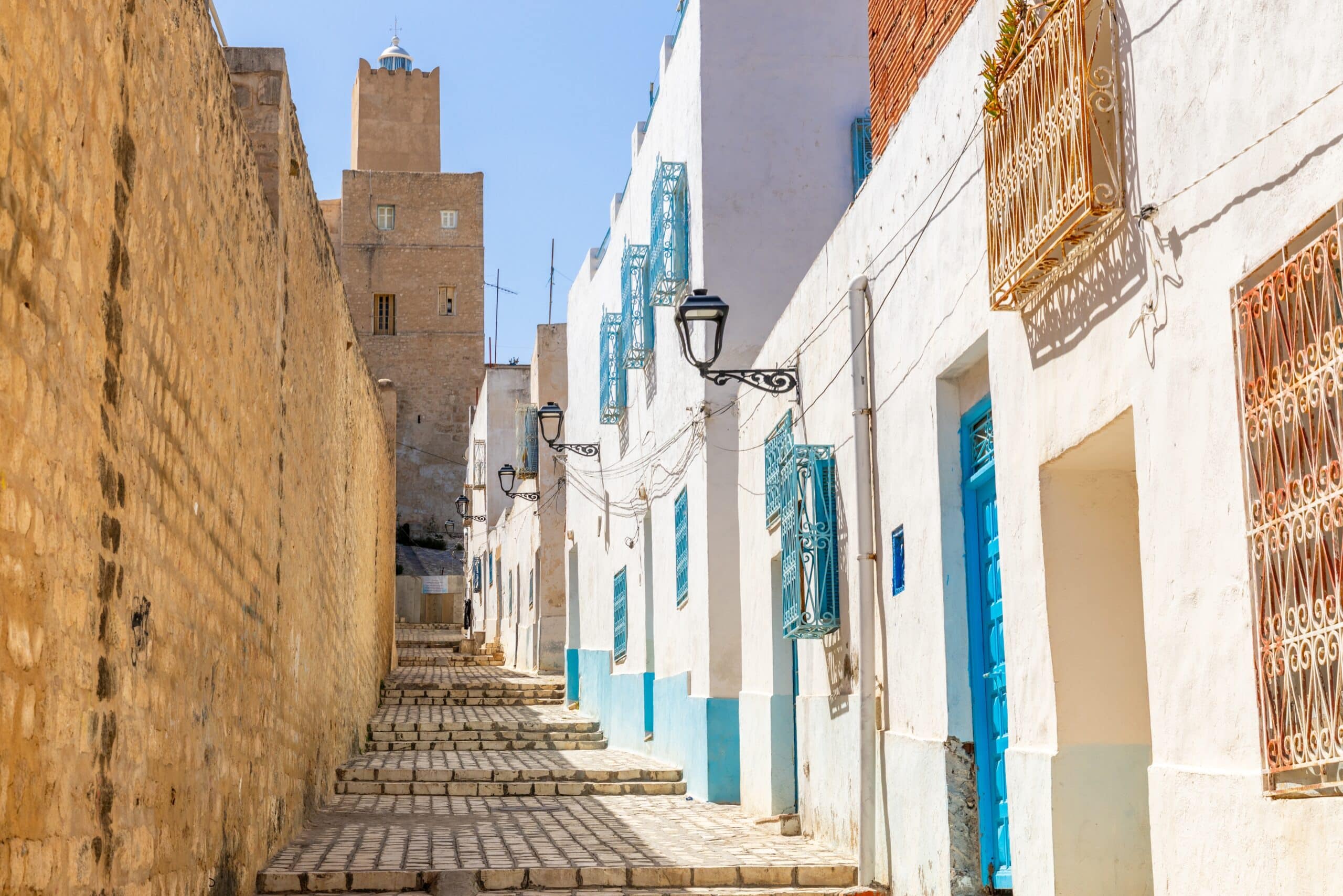
Tunisia is a country where history feels remarkably close, woven seamlessly into everyday life and landscape. Though small in size, it holds an extraordinary concentration of civilizations, from ancient Phoenicians and mighty Romans to Arab dynasties, Ottoman rulers, and Mediterranean influences. Every journey through Tunisia feels like crossing centuries in a matter of hours, guided by warm light, sea breezes, and an enduring sense of balance.
Positioned between the Mediterranean Sea and the Sahara Desert, Tunisia offers striking geographic diversity. Olive groves blanket rolling hills in the north, while golden coastlines stretch endlessly along the east. Further south, the land opens into desert plains, salt lakes, and oases that shimmer beneath vast skies. This diversity has shaped Tunisian culture—adaptable, welcoming, and deeply rooted in the land.
Tunisia’s cities tell stories of continuity. Ancient ruins stand beside living medinas, where crafts, markets, and daily rituals remain unchanged in spirit for generations. Hospitality is natural and generous, expressed through shared meals, conversation, and a deep pride in heritage. Life here flows calmly, allowing visitors to connect not only with places, but with people.
What makes Tunisia especially compelling is its accessibility of history. Amphitheaters, temples, and mosques are not distant monuments; they are part of the lived environment, open to the sky and to imagination. The country invites exploration without overwhelm, offering clarity, warmth, and rhythm.
This article explores some of the best places in Tunisia—destinations that reflect its cultural depth, natural beauty, and timeless identity. Together, they form a journey through a land where past and present coexist effortlessly, and where every path leads to discovery.
15. Tunis and Carthage: Layers of a Capital
Tunis is a capital shaped by layers of civilization, where ancient heritage and modern life coexist in natural rhythm. At its heart lies the historic medina, a UNESCO World Heritage site that remains vibrant and deeply lived-in. Narrow streets unfold into mosques, madrasas, and traditional homes, while souks overflow with spices, textiles, and everyday conversation. The medina is not frozen in time; it breathes through daily rituals that preserve its soul.
Beyond the old city, modern Tunis opens outward with wide boulevards, cafés, galleries, and cultural institutions that reflect Tunisia’s contemporary identity. This contrast gives the capital its unique energy—grounded in memory yet forward-looking. The Bardo Museum, housed in a former palace, further reveals Tunisia’s extraordinary historical depth through one of the world’s finest collections of Roman mosaics.
Just a short distance away, Carthage adds a powerful historical dimension. Once a dominant Phoenician empire and later a Roman stronghold, its ruins overlook the Mediterranean with quiet authority. Ancient ports, baths, and columns trace the rise and fall of a city that once rivaled Rome itself. Standing among these remains, visitors feel the weight of ambition, conflict, and cultural exchange.
Together, Tunis and Carthage embody Tunisia’s layered identity—a place where civilizations overlap rather than erase one another. The capital region offers not just history, but perspective, revealing how continuity, adaptation, and coexistence shape a nation’s character.
14. Sidi Bou Said: Blue, White, and Infinite Calm
Sidi Bou Said is Tunisia’s most iconic village, perched high above the Mediterranean like a vision shaped by light and serenity. Its whitewashed walls, blue doors, and wrought-iron balconies create a harmonious palette that feels both intentional and timeless. Every corner seems designed to invite stillness and reflection.
Wandering through the village is a sensory experience. Bougainvillea drapes over walls, jasmine scents the air, and sunlight dances across stone pathways. Small art galleries, traditional cafés, and quiet courtyards offer moments of pause, encouraging visitors to slow their pace and simply observe. The village has long drawn artists, writers, and musicians inspired by its calm and clarity.
From clifftop viewpoints, the Mediterranean stretches endlessly below, its surface shifting from pale turquoise to deep blue as the day progresses. The sound of waves and distant seagulls reinforces the sense of gentle separation from the world beyond.
Sidi Bou Said is not defined by activity, but by atmosphere. It represents Tunisia’s poetic side—a place where beauty is found in balance, restraint, and presence. More than a destination, it is a state of mind, offering visitors a lasting sense of calm rooted in simplicity and harmony.
13. Kairouan: Spiritual Heart of Tunisia
Kairouan holds a sacred place in Tunisia’s cultural and spiritual identity. Founded in the seventh century, it became one of the most important centers of Islamic learning in North Africa, shaping religious thought, scholarship, and architecture across the region. Its influence extends far beyond its walls.
The Great Mosque of Kairouan stands as the city’s defining landmark and one of the most revered Islamic monuments in the Maghreb. Its vast courtyard, ancient minaret, and balanced proportions convey a powerful sense of calm and reverence. Built using materials from earlier civilizations, the mosque itself reflects continuity and transformation.
Surrounding the mosque, the medina unfolds quietly. Whitewashed homes, traditional workshops, and modest markets maintain a rhythm guided by faith and routine. Crafts such as carpet weaving and calligraphy remain deeply rooted in tradition, passed down through generations.
Kairouan’s atmosphere is contemplative rather than bustling. Life here encourages patience, humility, and reflection. Pilgrims and visitors alike are drawn not by spectacle, but by the city’s spiritual gravity.
Kairouan represents endurance. It stands as a reminder that knowledge, faith, and community can shape a city for centuries, offering Tunisia a profound sense of continuity and inner strength.
12. Dougga: A Roman City Above the Fields
Dougga is one of the most impressive Roman archaeological sites in North Africa, rising quietly above fertile countryside in northern Tunisia. Unlike urban ruins, Dougga feels open and expansive, framed by rolling hills and endless sky.
The site preserves theaters, temples, baths, and homes in remarkable condition. The Capitol and theater stand proudly, offering panoramic views of the surrounding valley that once sustained the city.
Walking through Dougga is immersive. Grass grows between stones, birdsong fills the air, and time feels suspended. The site invites imagination, allowing visitors to envision daily Roman life in a setting of rare tranquility.
Dougga embodies Tunisia’s ability to preserve grandeur without spectacle—history experienced through space, silence, and light.
11. Hammamet: Gardens by the Sea
Hammamet is a town defined by ease, light, and the gentle presence of the Mediterranean. Known for its beaches and relaxed rhythm, it has long been a refuge for artists, writers, and travelers drawn to its calm beauty and coastal charm.
The historic medina rises above the sea, enclosed by soft golden walls that glow warmly at sunset. Inside, narrow streets lead to quiet homes, small shops, and shaded cafés where time seems to slow naturally. Unlike larger cities, Hammamet’s medina feels intimate and welcoming rather than overwhelming.
Beyond the walls, gardens and citrus groves surround the town, filling the air with subtle fragrance. The coastline stretches wide and open, offering clear waters and long walks along the sand. The sea here is not dramatic—it is soothing, reinforcing the town’s restorative character.
Hammamet balances tradition and leisure with quiet confidence. It does not seek to impress, but to comfort. Visitors often leave with a sense of renewal, having experienced Tunisia in one of its most gentle and harmonious forms.
10. El Djem: Echoes of Imperial Grandeur
El Djem is home to one of the most extraordinary monuments in the Mediterranean world: its vast Roman amphitheater. Rising unexpectedly from the flat plains of central Tunisia, this colossal structure stands as a testament to the power, ambition, and architectural mastery of the Roman Empire in North Africa.
Built in the third century, the amphitheater once hosted gladiatorial contests and public spectacles for tens of thousands of spectators. Its scale rivals that of Rome’s Colosseum, yet its setting—open, quiet, and bathed in warm light—creates a uniquely contemplative experience. Walking through its arches and underground passages, visitors can sense both the grandeur and the human drama that once filled the space.
Beyond the monument itself, El Djem offers insight into Tunisia’s agricultural heartland, where olive groves stretch toward the horizon. Nearby museums preserve intricate mosaics that reveal the artistry and daily life of the Roman period.
El Djem is powerful in its stillness. It reminds travelers that even the most monumental empires leave behind spaces for reflection, where history speaks softly but profoundly.
9. Sousse: Living History by the Sea
Sousse is a city where ancient fortifications meet Mediterranean vitality. Its medina, a UNESCO World Heritage site, remains one of the best-preserved in Tunisia, offering a vivid sense of continuity between past and present.
The Ribat of Sousse, a fortress-monastery overlooking the sea, stands as a symbol of early Islamic architecture and defense. From its tower, sweeping views reveal both the old city’s rooftops and the modern coastline beyond.
Inside the medina, narrow streets bustle with markets, workshops, and daily life. Crafts, spices, and conversation flow freely, creating an atmosphere that feels authentic and lived-in rather than staged.
Outside the walls, modern Sousse stretches along sandy beaches, blending history with leisure. This balance defines the city’s appeal—it is both guardian of heritage and vibrant coastal destination.
Sousse captures Tunisia’s enduring rhythm, where centuries coexist effortlessly beside the sea.
8. Matmata: Life Beneath the Earth
Matmata offers one of Tunisia’s most distinctive cultural landscapes. Known for its underground homes, this desert village reflects centuries of adaptation to harsh climate and limited resources. Homes are carved into the earth, centered around open courtyards that provide light, ventilation, and privacy.
Descending into these dwellings feels like entering another world—quiet, cool, and ingeniously designed. Families continue to live in these structures, preserving traditions rooted in practicality and resilience.
The surrounding landscape is stark and lunar, shaped by wind and time. Matmata’s unique architecture gained global attention through cinema, yet its true value lies in lived heritage rather than spectacle.
Matmata reveals Tunisia’s ingenuity. It shows how culture evolves in harmony with environment, turning necessity into enduring identity.
7. Tozeur: Oasis of Light and Design
Tozeur stands at the edge of the Sahara as a refined oasis city known for its distinctive brick architecture and intellectual legacy. Palm groves surround the town, sustained by ancient irrigation systems that continue to support life in the desert.
The old quarter, Ouled El Hadef, features geometric brick patterns that catch the light beautifully, creating subtle variations of color and shadow. Walking through its streets feels calm and contemplative.
Nearby salt flats and desert landscapes offer striking contrasts—mirages shimmer under the sun, while oases appear like visions of green abundance. Tozeur has long attracted scholars, artists, and travelers seeking inspiration and clarity.
Tozeur is a place of balance—between desert vastness and human creativity, tradition and elegance.
6. Tataouine and the Ksour: Fortresses of the South
Tataouine opens the door to southern Tunisia’s dramatic landscapes and fortified granaries known as ksour. These structures, built from stone and earth, rise from hillsides as symbols of communal life and protection.
Ksour such as Ksar Ouled Soltane and Ksar Hadada reveal sophisticated systems of storage and cooperation, designed to safeguard harvests in a challenging environment. Their rounded forms and stacked chambers create striking visual harmony.
The region’s Amazigh heritage remains strong, expressed through architecture, language, and social customs. The surrounding terrain—rocky, open, and powerful—adds to the sense of resilience that defines the south.
Tataouine embodies endurance. It reflects Tunisia’s ability to thrive through collective wisdom, memory, and respect for the land.
5. Chott el Jerid: The Mirror of the Desert
Chott el Jerid is one of Tunisia’s most surreal landscapes, a vast salt lake stretching across the edge of the Sahara. At first glance, it appears empty and endless, yet its beauty lies in constant transformation. Light, heat, and distance reshape the surface throughout the day, creating mirages that shimmer like illusions on the horizon.
In summer, the salt crust fractures into geometric patterns, glowing white and gold beneath the sun. After rare rains, shallow water reflects the sky, turning the desert into a mirror that blurs the boundary between earth and air. Colors shift from silver to pink to deep blue, depending on time and season.
Though seemingly inhospitable, Chott el Jerid has long guided travelers, traders, and nomads across southern Tunisia. Roads cut carefully through the salt, offering passage across a landscape that demands respect and awareness.
Chott el Jerid is not a place to rush. It invites contemplation and silence, offering one of Tunisia’s most powerful lessons in scale, light, and impermanence.
4. Kerkouane: A Phoenician City Preserved in Time
Kerkouane is one of Tunisia’s rarest treasures, an ancient Phoenician city untouched by Roman reconstruction. Located on the Cap Bon Peninsula near the sea, it offers a direct window into Punic civilization as it once existed.
Stone streets, residential homes, and bathing areas remain clearly visible, revealing sophisticated urban planning and daily life from over two thousand years ago. The city’s proximity to the Mediterranean reflects its maritime identity, rooted in trade and navigation.
Unlike grand imperial ruins, Kerkouane feels intimate and human. Its modest scale allows visitors to imagine family life, work, and ritual with remarkable clarity.
Kerkouane stands as a reminder of Tunisia’s earliest global connections. It preserves a chapter of history often overshadowed, yet essential to understanding the Mediterranean world.
3. Bizerte: Tunisia’s Northern Gateway
Bizerte sits quietly at Tunisia’s northern edge, where lake, sea, and sky converge. As one of the country’s oldest cities, it blends Phoenician origins with Ottoman and modern influences, all shaped by its strategic maritime position.
The old port remains the heart of the city, lined with fishing boats, cafés, and pastel-colored buildings. Life unfolds gently here, guided by tides and routine rather than urgency.
Nearby, Lake Ichkeul—part of a UNESCO-listed national park—hosts migratory birds and rare ecosystems, adding natural richness to the region. Hills and greenery surround the city, offering a cooler, softer landscape than much of Tunisia.
Bizerte feels grounded and authentic. It offers travelers a quieter vision of coastal life, where history, nature, and community exist in natural balance.
2. Djerba: Island of Memory and Coexistence
Djerba is an island defined by openness—of landscape, culture, and spirit. Low white buildings, palm trees, and sandy roads create a sense of space and calm that distinguishes it from mainland Tunisia.
The island is known for its long history of coexistence, particularly through the El Ghriba Synagogue, one of the oldest Jewish places of worship in the world. This heritage reflects Djerba’s role as a crossroads of faiths and traditions.
Beyond history, Djerba offers beaches, crafts, and a relaxed rhythm of life. Pottery workshops, markets, and seaside cafés reveal everyday creativity shaped by island living.
Djerba is not dramatic—it is gentle. Its beauty lies in continuity, tolerance, and the enduring power of shared space.
1. Sbeitla: Faith and Empire in Stone
Sbeitla, known in antiquity as Sufetula, preserves one of Tunisia’s most striking Roman sites. Its temples, dedicated to Jupiter, Juno, and Minerva, stand side by side, creating a rare and powerful architectural composition.
The ruins extend across open land, with churches, baths, and streets revealing the city’s evolution from Roman rule to early Christianity. The surrounding mountains and quiet atmosphere enhance the sense of historical depth.
Sbeitla feels solemn and dignified. It reflects moments of transition—political, religious, and cultural—that shaped North Africa’s history.
This site invites thoughtful exploration, offering clarity rather than spectacle.