
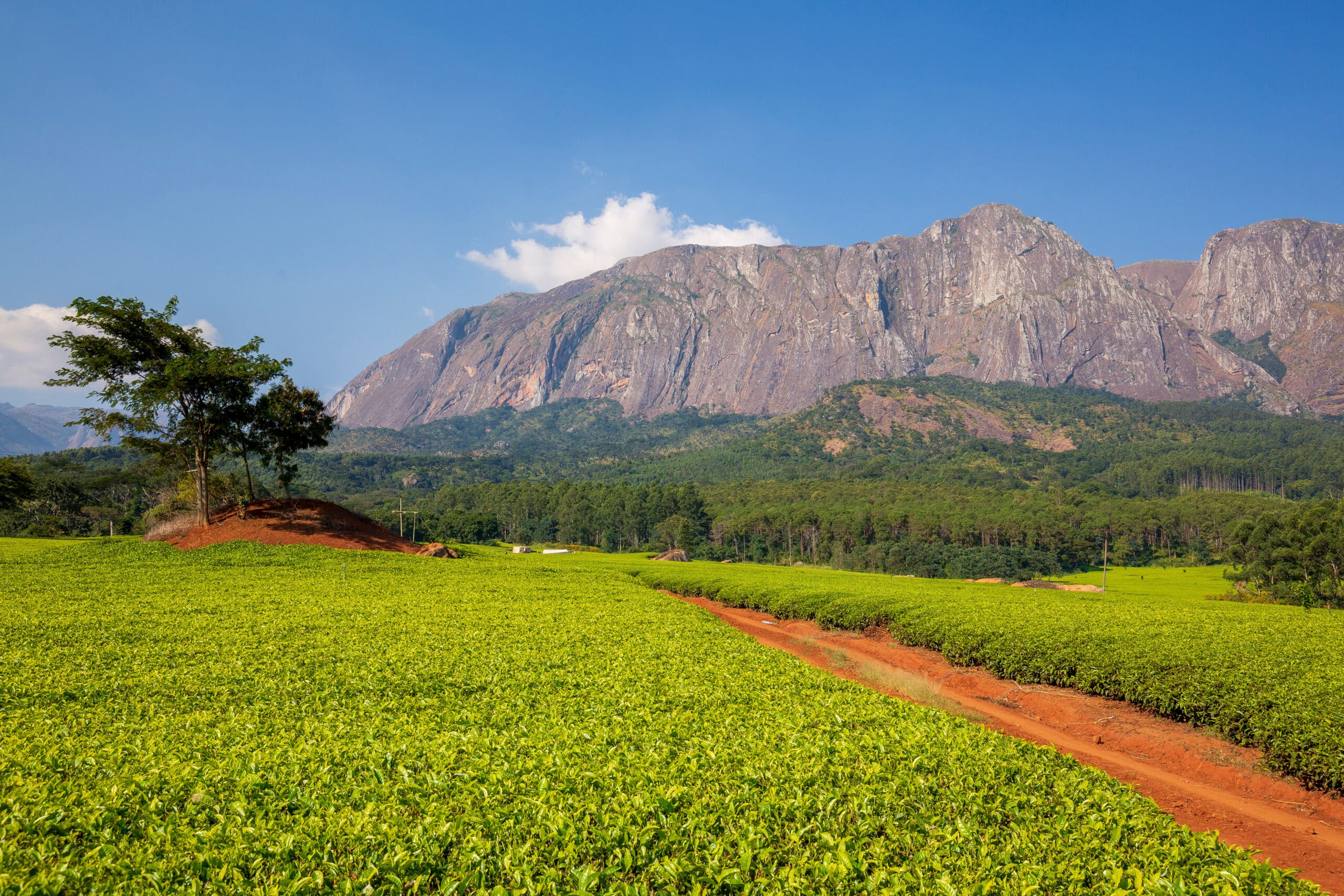
Malawi reveals itself through water and land in constant conversation. Long and narrow, the country stretches along the Great Rift Valley, its shape defined less by borders than by Lake Malawi, which runs like a spine through its eastern edge. Geography here does not overwhelm; it steadies. The land invites attentiveness rather than conquest, rewarding those who move slowly enough to notice scale, repetition, and rhythm.
Lake Malawi dominates not only the map, but imagination. Its presence moderates climate, shapes settlement, and offers both livelihood and reflection. Villages cluster along its shores, oriented toward fishing cycles and wind patterns, while inland plateaus rise gently into farmland and highlands. Elevation cools the air, alters vegetation, and shifts daily tempo. These transitions are gradual, allowing life to adjust rather than rupture.
Malawi’s landscapes feel accessible but not simple. Soil fertility supports agriculture that anchors most lives, while hills and escarpments introduce perspective and pause. Rivers thread quietly through valleys, reinforcing a sense of continuity rather than spectacle. Geography here encourages coexistence—between people and land, between effort and patience.
Malawi teaches proportion. Its beauty is not dramatic in excess, but consistent in presence. The land does not demand attention; it earns it through reliability. To travel through Malawi is to learn that meaning often accumulates quietly, through repeated encounters with the same water, the same hills, the same light. Here, geography does not push forward aggressively. It waits, confident that those who arrive with patience will leave with understanding rooted firmly in place.
15. Lake Malawi (Lake Nyasa)
Lake Malawi stretches vast and calm along the country’s eastern edge, shaping Malawi’s identity more profoundly than any city or monument. Its waters are deep and clear, bordered by sandy shores, rocky outcrops, and fishing villages that orient daily life toward the lake’s moods. Geography here is expansive yet intimate, offering scale without intimidation.
The lake moderates climate, softening heat and guiding seasonal rhythms. Early mornings bring glassy surfaces broken only by paddles and nets, while afternoons introduce wind and movement. Fishing is both livelihood and inheritance, with techniques and knowledge passed down across generations. The lake provides food, transport, and orientation, anchoring communities physically and culturally.
Villages along the shore feel attuned rather than imposed. Homes face the water, paths follow contours, and routines align with light and wind. The lake’s biodiversity is extraordinary, yet its presence never feels ornamental. It is working water, sustaining life quietly and consistently.
Lake Malawi inspires through constancy. Its vastness encourages reflection, but its accessibility invites participation. Children swim, boats cross short distances, and evenings settle into shared quiet as the sun lowers across open water. The horizon remains wide, but never distant.
The lake teaches patience. It does not reward haste or force. Weather changes gradually, and those who live alongside it learn to read signs rather than resist them. To sit by Lake Malawi is to understand how geography can stabilize identity. The water holds stories, livelihoods, and time itself, offering a reminder that endurance often flows—not loudly, but steadily—through shared reliance on land and water that give without spectacle.
14. Lilongwe
Lilongwe spreads gently across Malawi’s central plateau, a capital shaped by openness rather than vertical ambition. The land rolls softly, allowing the city to grow outward instead of upward. Geography here encourages space, greenery, and separation between districts, creating a rhythm that feels deliberate and unhurried.
The Lilongwe River threads through the city, quiet but persistent, reinforcing agricultural roots that still define much of daily life. Even within the capital, farming remains visible—fields appear between neighborhoods, and markets reflect close ties to surrounding rural areas. The city feels porous, its boundaries blending easily into farmland.
Lilongwe’s climate is moderate, shaped by elevation that cools the air and softens extremes. This moderation influences temperament. Movement is steady, conversations unforced, and daily routines grounded in predictability. Government presence is evident but not overwhelming, integrated into a city that still feels residential and communal.
What inspires in Lilongwe is restraint. The city does not strain for spectacle or density. Instead, it prioritizes livability, allowing space for growth without urgency. Roads are wide, trees common, and the pace allows reflection.
Lilongwe teaches that capitals need not dominate national identity. Geography supports this humility, offering land that absorbs rather than amplifies power. The city stands as a mediator—between rural and urban, governance and agriculture, planning and patience. Here, geography offers balance, reminding visitors that progress can be expansive without being aggressive, and that leadership, like land, can remain grounded.
13. Blantyre
Blantyre rests in southern Malawi’s highlands, a city shaped by elevation, commerce, and proximity to surrounding hills. The land rises decisively here, cooling the air and sharpening perspective. Geography creates enclosure and momentum at once, producing a city that feels industrious yet reflective.
Historically Malawi’s commercial center, Blantyre’s location favored trade routes linking highlands to lowlands and neighboring regions. That legacy persists. Markets are busy, streets active, and movement purposeful. Yet the hills soften intensity, reminding the city of limits imposed by terrain.
The surrounding landscape is fertile, supporting tea estates and small farms that climb slopes with careful geometry. Agriculture remains visible, reinforcing the relationship between labor and land. Rainfall is generous, feeding greenery that frames the city and tempers its pace.
Blantyre inspires through effort balanced by awareness. The city works hard, but it does so within geographic constraint. Roads curve with hills, neighborhoods settle into elevation, and daily routines respect weather and slope. The land demands attention, shaping behavior through necessity rather than instruction.
From higher ground, the city reveals its structure—clusters of activity separated by green space, movement guided by terrain. Blantyre teaches that productivity thrives when aligned with geography. The hills do not impede progress; they define it. In Blantyre, ambition is grounded, shaped by land that insists on balance between drive and adaptation.
12. Zomba Plateau
The Zomba Plateau rises sharply above surrounding plains, a dramatic shift in elevation that transforms climate, vegetation, and perception. At its base lies Zomba town, once Malawi’s capital, oriented toward the plateau that dominates its skyline. Geography here asserts itself clearly, offering both refuge and perspective.
Ascending the plateau changes everything. Air cools, light softens, and the landscape opens into grasslands, forests, and streams. The plateau feels expansive but contained, a place where distance is measured by footpaths and viewpoints rather than roads. The land invites walking, pause, and observation.
Water flows generously here. Streams cut through rock and soil, feeding life below and reinforcing the plateau’s role as provider as well as vantage point. The environment supports farming and grazing carefully adapted to slope and altitude.
Zomba Plateau inspires through elevation without isolation. It offers distance from lowland heat and congestion without detachment from human life. The views are wide, but the experience remains grounded—weather shifts quickly, and the land reminds visitors of its authority.
The plateau teaches proportion. From above, settlements appear small, yet purposeful. Life below feels connected rather than diminished. Geography here reframes urgency, suggesting that perspective often comes from stepping upward rather than away. Zomba Plateau leaves a sense of calm clarity, an understanding that land can lift the body while steadying the mind.
11. Nyika Plateau
Nyika Plateau stretches across northern Malawi, a high-altitude landscape defined by openness, grasslands, and cool air. Unlike enclosed highlands elsewhere, Nyika feels expansive and quiet, its wide horizons emphasizing space and solitude. Geography here alters both movement and thought.
The plateau’s elevation creates a distinct climate. Mist settles in the mornings, temperatures remain mild, and seasonal flowers transform grasslands into fields of color. Wildlife moves across open space without obstruction, reinforcing the importance of continuity and scale.
Human presence is light. Settlements are sparse, and activity aligns closely with land capacity. Paths are long, distances deceptive, and time stretches. The land does not accommodate hurry. It insists on awareness and preparation.
Nyika inspires through restraint. It shows the power of leaving space untouched, allowing ecosystems to function without interruption. The plateau’s beauty lies not in concentration, but in dispersion—in the way life spreads thinly yet sustainably across land.
Here, geography teaches humility. The openness reduces individual urgency, replacing it with attentiveness to wind, weather, and terrain. Nyika Plateau offers a vision of coexistence grounded in scale, reminding visitors that preservation is not absence of use, but respect for limits. It stands as Malawi’s quiet highland, offering clarity born from space rather than intensity.
10. Mangochi
Mangochi sits where Lake Malawi narrows and the Shire River begins its southward journey. Geography here feels transitional, shaped by both lake and river, openness and flow. The land slopes gently toward the water, and daily life aligns itself with movement rather than stillness.
Fishing defines Mangochi’s rhythm. Boats depart early, returning as the sun climbs, while nets dry along the shore in careful order. The lake remains central, but the presence of the river introduces a sense of passage—of things moving onward rather than remaining contained. Trade follows these routes, reinforcing Mangochi’s role as connector.
The surrounding land supports farming, with fields extending inland and responding to seasonal rains. Climate here is warm, moderated by water that softens extremes. Settlements reflect this balance, oriented toward both cultivation and transport.
Mangochi inspires through continuity of movement. It teaches that places need not be endpoints to matter. Geography supports livelihoods built on transition—between lake and river, fishing and farming, arrival and departure.
The town’s calm confidence comes from understanding flow. Water dictates pace, and those who live here learn to move with it rather than against it. Mangochi offers a lesson in alignment, showing how geography can support adaptability without instability. The land does not rush, but it never fully rests, reminding visitors that progress often travels quietly, carried forward by currents long established.
9. Nkhata Bay
Nkhata Bay curves gently along Lake Malawi’s northern shore, enclosed by hills that descend sharply into water. The geography feels intimate and protective, shaping a town that is both open to the lake and held by land. Roads wind downward, reinforcing the sense of arrival earned through descent.
The lake dominates perception. Water clarity reveals depth and movement beneath the surface, while the surrounding hills frame each view deliberately. Fishing and small-scale trade define daily routines, and the pace remains measured, shaped by terrain rather than urgency.
Climate here is moderated by elevation and water, producing cooler evenings and steady winds. Villages nestle along slopes, adapting to limited flat land with ingenuity and care. The land requires attentiveness, and settlements reflect that respect.
Nkhata Bay inspires through enclosure without confinement. The hills limit sprawl, encouraging cohesion and community awareness. Life unfolds within visible boundaries, fostering connection rather than isolation.
The town teaches that geography can create belonging through form. The descent toward water mirrors a shift in mindset—toward calm, focus, and presence. Nkhata Bay does not overwhelm with scale; it concentrates experience. The lake remains vast, but access feels personal. Here, geography demonstrates how limits can enhance intimacy, shaping a place that feels grounded, reflective, and quietly sustaining.
8. Karonga
Karonga lies at Malawi’s northernmost edge, where lake, plains, and distant mountains converge. Geography here emphasizes threshold—between countries, ecosystems, and histories. The land opens wide, offering long views and a sense of outward orientation.
The nearby Songwe River marks national boundaries while sustaining agriculture and settlement. Fields stretch toward the horizon, shaped by seasonal rainfall and fertile soil. Life aligns with cycles of planting and harvest, reinforcing patience and foresight.
Lake Malawi remains present, but Karonga’s relationship to water feels broader, less enclosed. Wind moves freely across plains, and distances feel longer. The town’s pace reflects this openness—steady, deliberate, and aware of scale.
Karonga inspires through perspective. The land encourages outward looking, reminding visitors that borders are human constructs layered onto continuous terrain. Geography here emphasizes connection rather than separation.
The region’s archaeological significance underscores this depth, revealing long human presence shaped by land and water. Karonga teaches that continuity often precedes modern identity. The land remembers beyond contemporary boundaries.
To move through Karonga is to feel Malawi’s northern reach, its quiet expansiveness. Geography offers room to think, to situate oneself within longer timelines. The town stands as a reminder that meaning often resides at edges—where land opens, histories overlap, and perspective broadens.
7. Salima
Salima stretches along Lake Malawi’s central shore, defined by long beaches and open horizons. Geography here is expansive and relaxed, offering uninterrupted views across water that reflect changing light and weather.
The lake moderates climate, producing consistent warmth and gentle breezes. Fishing villages line the shore, while inland farmland supports maize and cassava cultivation. Life follows predictable rhythms shaped by water and season rather than fluctuation.
Salima’s openness influences temperament. Movement is unhurried, and space feels generous. Settlements spread rather than cluster, reflecting land that does not demand compression. Roads run parallel to the lake, reinforcing orientation toward water.
Salima inspires through simplicity. The geography does not impose complexity; it offers clarity. Daily routines align naturally with environment, producing a sense of ease grounded in reliability.
The town teaches that beauty can be linear rather than concentrated. The shoreline invites walking, reflection, and repetition. The lake remains constant, while subtle shifts—wind, cloud, light—add variation.
Salima offers reassurance through consistency. Geography here reinforces the idea that stability is not stagnation. Instead, it is the foundation upon which meaning accumulates quietly. The land does not distract; it sustains, offering space to notice continuity and calm.
6. Dedza
Dedza rises into Malawi’s central highlands, a town shaped by elevation and proximity to the border. The land climbs steadily, cooling the air and sharpening perspective. Geography here alters both climate and cadence.
Farming defines the surrounding landscape. Fields contour hillsides carefully, reflecting adaptation to slope and soil. Clay-rich earth supports pottery traditions that draw directly from the land, blending livelihood and expression.
Dedza’s location encourages exchange. Cross-border movement influences markets, language, and trade, reinforcing the town’s openness. Roads wind through hills, reinforcing awareness of distance and terrain.
Dedza inspires through craft shaped by geography. The land provides material and constraint, guiding creativity rather than limiting it. Pottery emerges as both utility and identity, rooted in soil that holds memory.
The town teaches attentiveness. Elevation moderates pace, and the hills demand respect. Life unfolds with awareness of weather, slope, and distance. Dedza offers a lesson in grounded creativity—how environment shapes expression, and how identity can emerge directly from land.
5. Mulanje
Mount Mulanje rises sharply from southern Malawi’s plains, an isolated massif that dominates both landscape and imagination. Geography here is dramatic and unmistakable, offering vertical contrast to surrounding farmland.
The mountain creates its own climate. Rain gathers along slopes, feeding streams that sustain tea estates and villages below. Forests cling to elevation, while rock faces assert permanence. The land feels both generous and demanding.
Climbing Mulanje reveals scale gradually. Paths ascend through vegetation and mist, requiring preparation and humility. The mountain does not accommodate haste. It insists on effort and attentiveness.
Mulanje inspires through presence. The massif stands as reminder of natural authority, shaping livelihoods and weather patterns far beyond its base. Communities align themselves with its rhythms, drawing water, soil fertility, and orientation from its slopes.
The mountain teaches proportion. From above, plains appear vast yet ordered. Geography reframes urgency, replacing it with awareness of verticality and time. Mulanje offers clarity earned through ascent, reminding visitors that some understanding requires upward movement guided by respect rather than ambition.
4. Thyolo
Thyolo lies south of Blantyre, its identity shaped by rolling hills covered in tea estates. Geography here is cultivated yet commanding, blending human design with natural slope and rainfall.
Tea thrives in this elevation and climate, and the land reflects careful organization. Rows of green contour hillsides, responding precisely to terrain. Labor and landscape intertwine visibly.
Thyolo’s rhythm follows agricultural cycles. Harvest seasons dictate pace, while misty mornings and cool air soften movement. Settlements align themselves around estates, reinforcing the relationship between land and livelihood.
Thyolo inspires through intentional cultivation. The land demonstrates how productivity can coexist with visual harmony when geography leads design. Hills guide planting, water directs growth.
The town teaches alignment. Rather than reshape terrain aggressively, life here adapts to it. Geography becomes collaborator, not obstacle. Thyolo’s quiet order offers a lesson in working with land patiently, allowing form to follow function shaped by slope, soil, and climate.
3. Mzimba
Mzimba sits on Malawi’s northern plateau, where elevation cools the air and opens the land into wide, gently rolling expanses. Geography here emphasizes distance and calm, shaping settlement patterns that feel spacious and deliberate.
Agriculture dominates, with fields stretching outward and villages spread rather than clustered. The land supports maize and livestock, and life aligns closely with seasonal predictability.
Mzimba’s pace reflects its geography. Movement is unhurried, conversations extended, and routines shaped by familiarity. Roads travel long distances, reinforcing awareness of scale.
Mzimba inspires through steadiness. The land offers reliability rather than drama, producing confidence rooted in continuity. Communities rely on land that responds consistently to effort.
The town teaches that openness can foster stability. Geography here reduces pressure, allowing life to unfold without compression. Mzimba stands as reminder that expansiveness need not dilute identity. Instead, it can reinforce it, offering room for patience, planning, and endurance grounded firmly in place.
2. Nkhotakota
Nkhotakota lies along Lake Malawi’s central shore, bordered by forest reserve and open water. Geography here combines enclosure and access, shaping a town oriented toward both protection and passage.
The nearby forest reserve introduces stillness and depth. Trees press close, moderating climate and sound. Wildlife corridors and protected land reinforce awareness of ecological continuity.
Fishing and farming coexist, and daily routines adapt to water and forest cycles. The town’s history as a trading center lingers subtly, embedded in paths and shoreline orientation.
Nkhotakota inspires through balance. The land offers both openness and shelter, teaching coexistence rather than dominance. Geography encourages restraint and respect.
The town demonstrates how protection can sustain productivity. Forest and lake remain active participants in daily life. Nkhotakota leaves an impression of equilibrium, where geography supports both livelihood and preservation without conflict.
1. Chiradzulu
Chiradzulu rests in southern Malawi’s highlands, surrounded by rolling hills that shape movement and perception. Geography here is gentle but directive, encouraging attention to slope and climate.
Farming defines the landscape, with fields adapting carefully to elevation. The air is cooler, mornings quiet, and life unfolds steadily.
Chiradzulu inspires through modesty. The land does not assert itself loudly, but it shapes behavior consistently. Communities respond with patience and care.
The town teaches that geography need not be dramatic to be formative. Subtle elevation alters rhythm, climate, and outlook. Chiradzulu offers a quiet conclusion to Malawi’s highland story—one grounded in attentiveness, continuity, and respect for land that shapes life without spectacle.